
Days and Days of Day Trips from Da Nang, Vietnam
Find the ride you need in

Discover the best day trips from Da Nang, Vietnam. Read our guide for the most fascinating places you can explore within a day’s reach.

Da Nang, located on Vietnam’s central coast, is a vibrant destination worth spending a few days exploring. However, the nearby day trips from Da Nang lead you to some of the country’s most evocative, historical, and natural sights you should not miss.
This guide will point out some of the best destinations nearby and have you rushing to plan your Central Vietnam itinerary.
Hoi An day trip
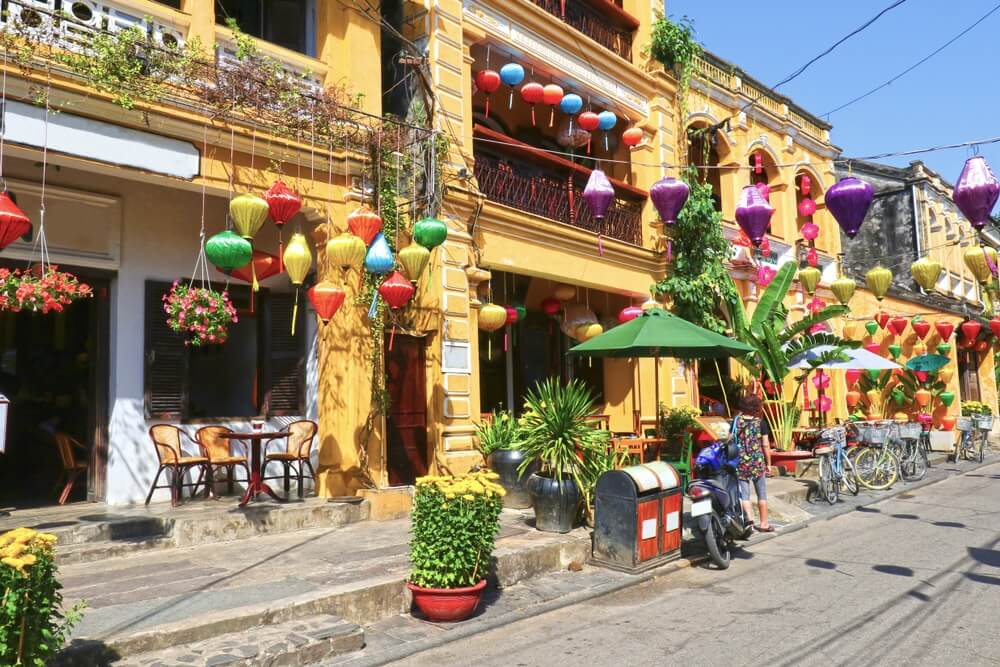
One of three UNESCO World Heritage Sites in the area, Hoi An is a nearby village that well-encapsulates the overlapping foreign influences that have affected Vietnam’s history. At the same time, there’s no question it retains a distinct Vietnamese flavor, making this charming town the ultimate cultural, historical and architectural melting pot.
From the 15th through the 19th Centuries, Hoi An was an important trading port. A place where Chinese, Japanese and colonial French commercial interests converged with Vietnamese merchants to create a truly international space — long before modern travel made such things the norm.
The result is an amalgamation of cultures and styles best experienced by walking the streets and gazing around at the many canals that hint at its former glory.
What to see in Hoi An

The Japanese Bridge is the most iconic destination in town, appearing on the Vietnamese 20,000 VND banknote. This compact wood and stone-covered structure was initially tied to superstitions linking the Japanese, Chinese and Vietnamese cultures to enduring prosperity.
These days, that prosperity is manifested in the form of a steady stream of international tourists marching across it to experience the town’s charms for themselves.
Quan Cong Temple is another showpiece of Hoi An’s diverse architecture, highlighting the Chinese influence.
Constructed in 1653, this collaboration between Chinese and Vietnamese artisans resulted in an ornate complex of highly decorative statues and pagodas that still draw businessmen looking for good luck for their commercial ventures.
Even the most devout skeptic can appreciate the striking detail and artistry contained in the intricate masonry work and embellished architectural flourishes.
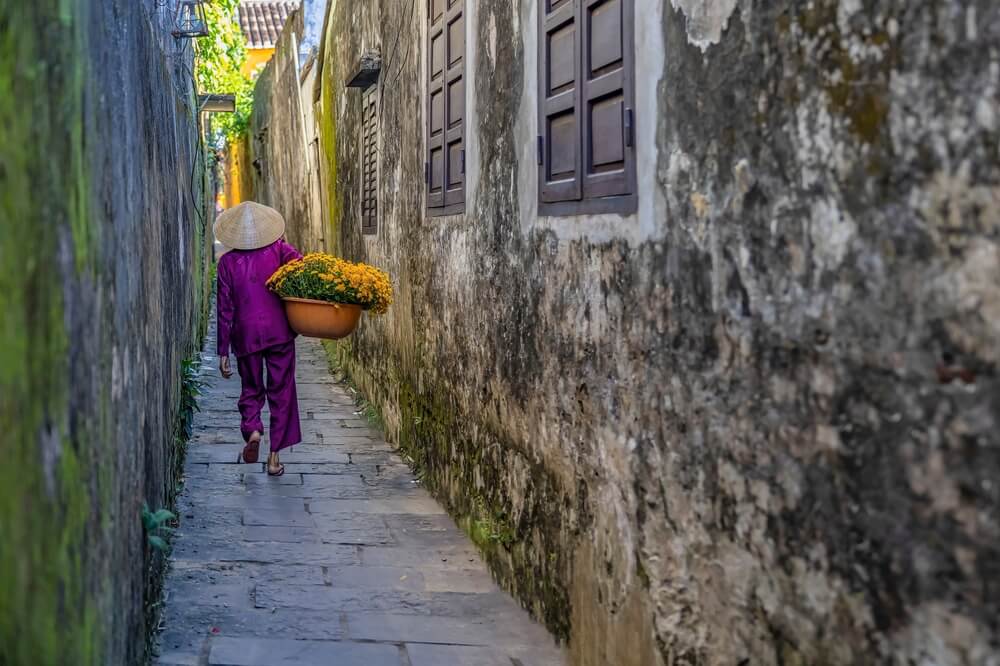
As fantastic as the places above may be, your greatest pleasure will likely be from wandering the yellow-hued side streets, admiring the weathered French Colonial architecture, and gazing up at the myriads of vibrant lanterns strung overhead nearly everywhere you go.
Come nightfall, this transforms Hoi An into a fairy-tale village with a nostalgic atmosphere and a colorful, festive ambiance. The scene along the Thu Bon River — with the warm glow of glittering lanterns reflected in the rippling water — is one you will greatly treasure.
Not to be missed is the chance to enjoy authentic and delicious local cuisine.
One of my favorite memories of Hoi An was ducking into an unassuming backstreet cafe to sit underneath an outdoor arbor while dipping grilled meat and fresh veggies into a sweet chili sauce exploding with flavor.
Hoi An offers plenty of similar, authentic, un-touristy moments for those willing to taste something new (pun intended).
How to get to Hoi An on a day trip from Da Nang
Getting to Hoi An from Da Nang is simple, quick and easy. It’s also refreshingly cheap.
While buses are the cheapest option, they take nearly twice as long as a taxi, which takes about half an hour to cover 29 kilometers (18 miles).
Beyond just being an economical alternative, a private shuttle will also allow you to stop and visit sights along the way.
No matter how you get there, you’ll get some great views of the East Vietnam Sea along the way.
Da Nang day trip to My Son Sanctuary
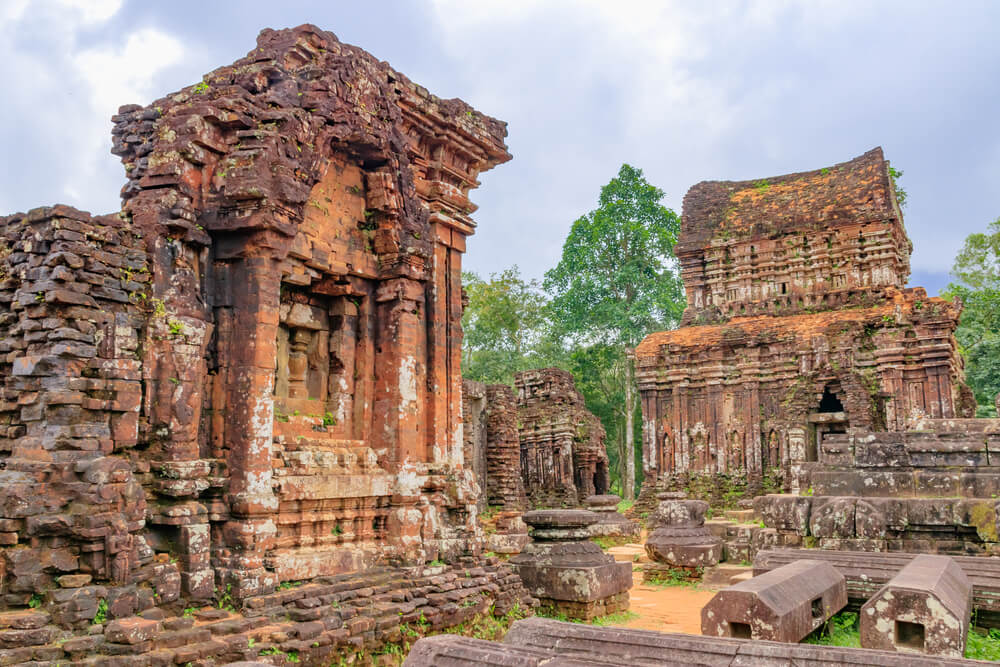
Nestled in a lush mountain valley some 69 kilometers (43 miles) southwest of Da Nang is another UNESCO World Heritage Site — the My Son Sanctuary.
My Son (pronounced mee sahn) is a collection of ancient brick Hindu temples that attest to the legacy of the Champa kingdoms that held sway between the 4th and 14th centuries.
Arranged in a series of clusters amidst thick jungle, these towers and temples vary in their condition. Some have been recently restored, and others openly attest to the ravages of time and damage from a hefty week of bombing during the Vietnam War.
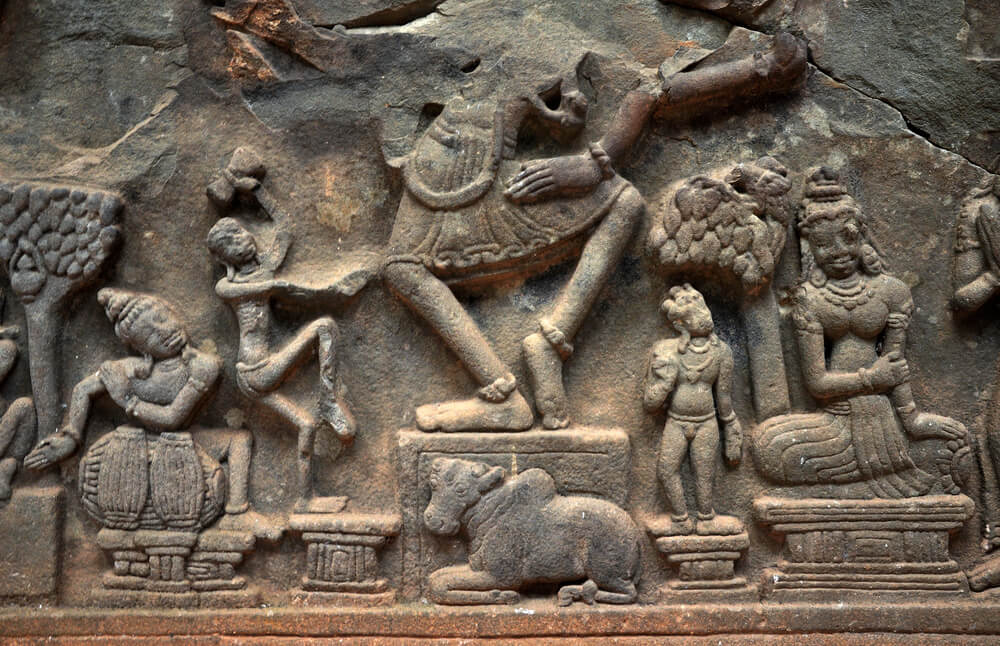
The ornate ruins contain detailed carvings depicting Hindu mythology and inscriptions in Sanskrit and other ancient languages.
Most tourists aren’t ancient religious scholars, but you don’t have to be to enjoy this wild and authentic temple complex.
The scene of reddish-orange ruins dripping with vines and covered with moss poking out of the jungle makes for excellent photo ops in a real-life Indiana Jones setting.
How to see My Son Sanctuary
The best way to visit My Son is on a guided tour.
Not only will this facilitate your getting to and around the site (which includes a ride on a stretch golf cart), but it will also explain what you’re actually looking at, its significance, and why the site was deemed worthy of preservation.
You could always do it independently, but you’d better brush up on your Sanskrit first.
The day of my visit coincided with monsoon-level rains that absolutely drenched the site’s paths and walkways with runoff from swollen rivers.
At first, I lamented that my photos wouldn’t be as striking as they could have been. But after sloshing through ankle-deep water in the Vietnamese jungles and taking in the ambiance of the rain, ruins, and vegetation, I left feeling stoked at the authenticity of the experience.
Perhaps your visit will be drier, but I truly hope it is equally authentic.
How to get to My Son Sanctuary
If you decide to visit independently, the good news is that getting to My Son from Da Nang only takes about an hour and, thankfully, isn’t terribly expensive to reach.
If you have your own traveling party, I highly recommend using a private car or minivan like I did. At the very least, it’s worth spending some time in the air conditioning, which, in Central Vietnam, is a welcome gift.
They’ll pick you up from your accommodation or a central meeting spot if you take a guided tour.
Day trip to the Imperial City of Hué
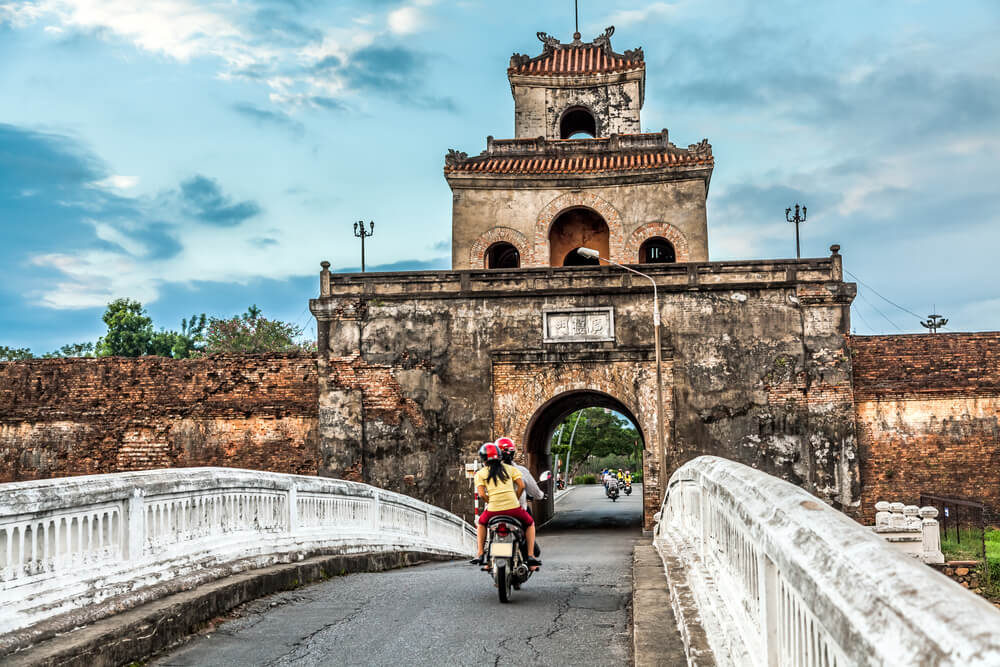
Located north up the coast, just 93 kilometers (58 miles) from Da Nang, is the Imperial City of Hué. It’s only a 2-hour car ride or 3-hour bus or train ride, so it is definitely worth a day trip.
This impressive complex (also part of a UNESCO World Heritage Site) served for a time as the capital of imperial Vietnam during the Nguyên Dynasty.
If Hué reminds you of the Forbidden City in Beijing, you might be onto something. The Emperor ordered the construction of his palace and temples to be based on its more illustrious counterpart to the north. With high walls, moats and other fortifications, you could be forgiven for mistaking which country you’re in — though the humidity should be a dead giveaway.
What to see in the Imperial City of Hué
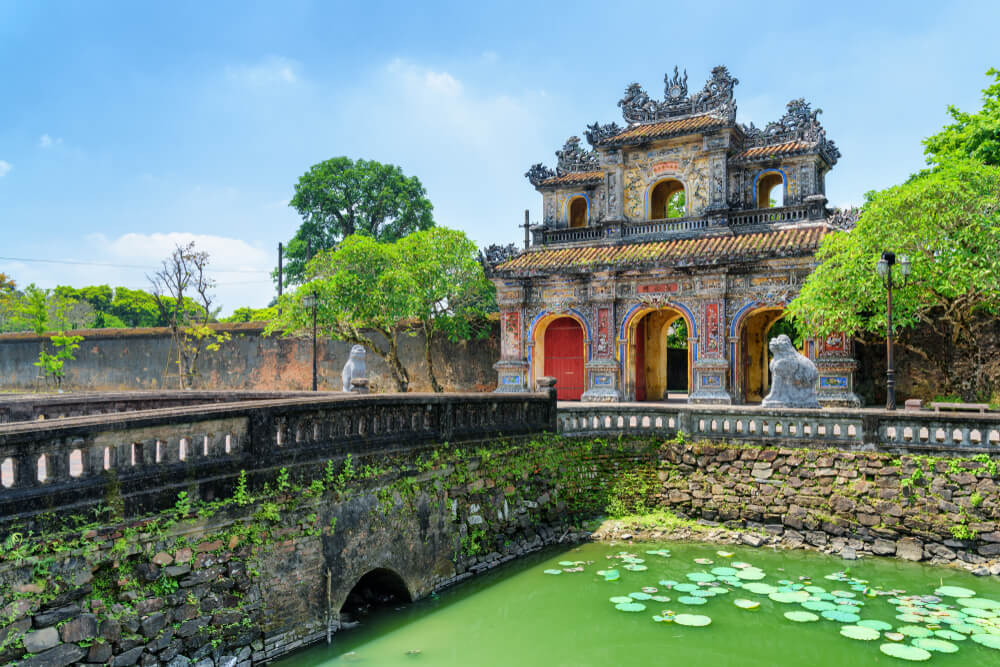
These days, tourists can freely wander the many structures that comprise the complex.
Numerous gates offer intricate architecture and historic charm. A series of ornate temples are spread throughout the compound, as are a few decorative pavilions and gardens.
The Purple Forbidden City, a city within the city, was once strictly reserved for imperial family members only. A visit here is an opportunity to see Vietnamese culture at its peak, long before French colonial ambitions and the ravages of 20th-century wars took their toll.
Sadly, many important buildings were either damaged or destroyed in 1968 during the famous Tet Offensive, when Viet Cong forces swarmed the city in a fierce battle with South Vietnamese and American troops.
How to get to Hué from Da Nang
Getting to Hué from Da Nang is easy, with multiple options running all day.
Prices are also extremely cheap, with several options costing less than $10. This makes a day trip to Hué economical (and practically inexcusable) if you spend time in Da Nang.
Marble Mountains day trip from Da Nang
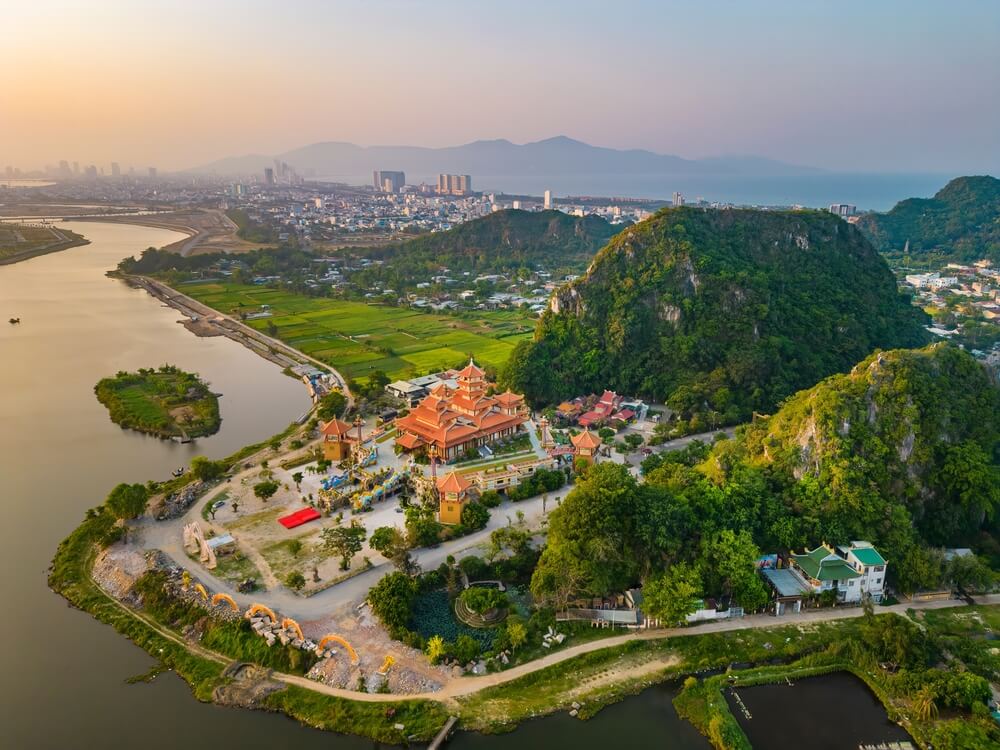
Technically more akin to hills than mountains, the Marble Mountains are a collection of five limestone and marble peaks that rise dramatically from the flat plains in the city’s southern limits.
Each bears the name of a different element (earth, fire, metal, water, wood) and has its own series of caves and tunnels. However, Mt. Thuy is the only one that is accessible to climb.
The mountains are home to several Buddhist and Hindu sanctuaries with magnificent religious-themed imagery carved from the marble. If you want a carving, shop along the periphery streets, where artisans create marble sculptures of all shapes and sizes, from small knick-knacks to impressively large garden ornaments. Just be sure to check your airline’s baggage weight policy before buying.
These mountains played a significant role in the Vietnam War as there was an American airfield on their doorstep. They also served as a hidden in-plain-sight secret hospital for Viet Cong soldiers.
How to get to the Marble Mountains from Da Nang
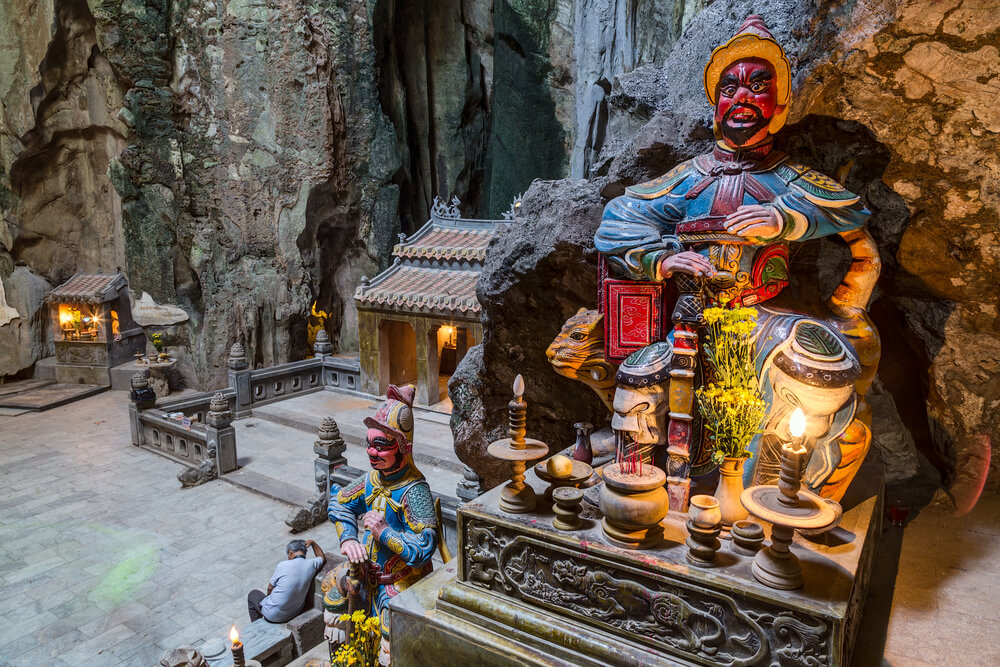
Lying in the southern reaches of the city, this day trip from Da Nang is both convenient to reach and easy to tour — especially if you decide not to hoof it up the 156 steps to the summit of Mt. Thuy.
It could also be easily combined with a trip to Hoi An or My Son, as an hour or two is generally sufficient to experience this attraction.
For the adrenaline junkies out there, you can take a tour of Marble Mountain and rappel into the caves where the Viet Cong had secret shrines and tunnels.
Bà Nà Hills day trip

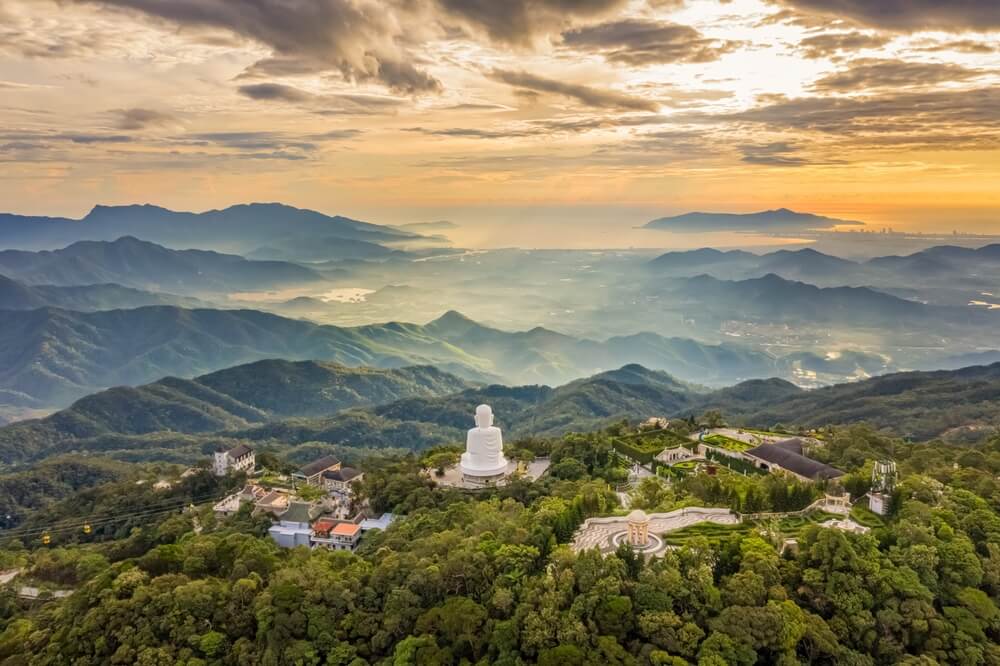
One of Central Vietnam’s most unique and modern attractions is just a half-hour ride west of Da Nang: Bà Nà Hills.
These hills were originally the site of a French hill station constructed to beat the heat (at about 1500 meters/4,921 feet). What exists today is a fusion that’s mostly theme park, partly spiritual, and a guaranteed photo op at every turn.
However, it’s the theme park aspect that draws many visitors, replete with replica French and Vietnamese villages along with various rides and attractions.
What to see in Bà Nà Hills
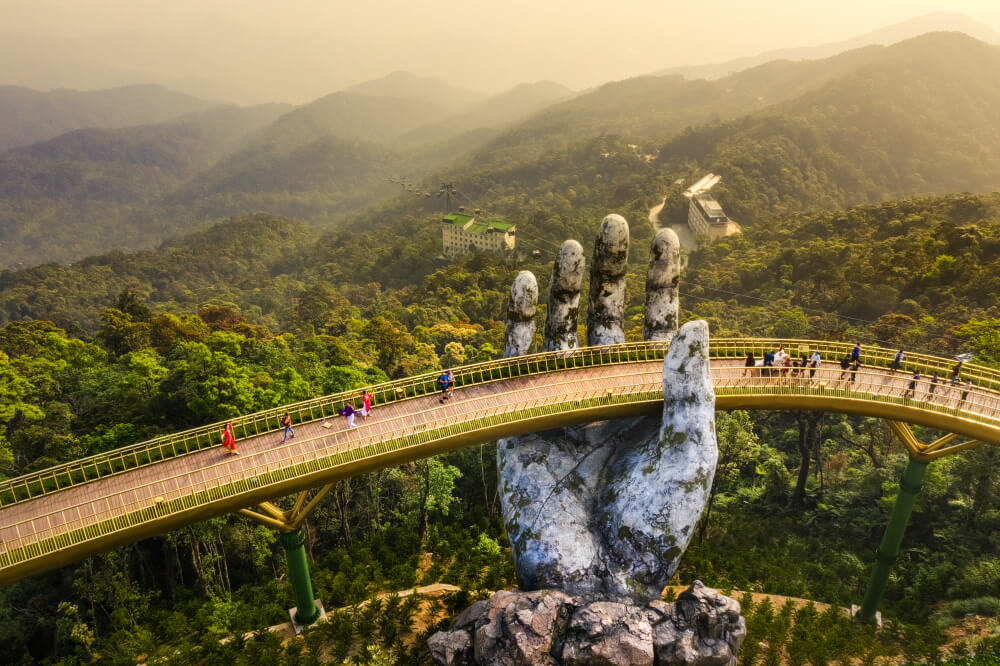
A rather extensive alpine coaster beckons adventurous types to experience the thrill of a gravity-driven ride. The less-daring can wander through meticulously landscaped French and Japanese-style gardens or a collection of religious shrines, including a massive 9-story Buddha statue surrounded by jaw-dropping views.
The most famous area attraction is the Golden Bridge, sometimes known as the “Hand Bridge” for its two colossal sculpted hands that support a pedestrian walkway full of enthusiastic selfie-takers.
If you’ve ever been on Instagram, you’ll know exactly what I mean. While there, you might as well add a selfie to your own feed.
Bà Nà Hills may not be an authentic destination, but it certainly is a fun one. And with so many other legit historical sites to choose from, a taste of the modern and make-believe is a perfectly acceptable diversion.
How to get to Bà Nà Hills
It’s quite easy to get from Da Nang to Bà Nà Hills. Once there, you should take the opportunity to experience one of the world’s longest cable car rides (5,791 meters/19,000 feet) up into the mountains.
And as if that wasn’t scenic enough, the views from the top lie above the cloud line!
Weather in Da Nang
Hot and sticky is the general rule in Da Nang, with two seasons dictating how intense it is.
The monsoon season runs from September through March, bringing frequent rain and higher humidity.
April through August is the dry season, with higher temperatures and the possibility of powerful, passing showers.
February through May are generally the most pleasant, with lower humidity levels, cooler daily highs, and sunnier skies.
Map of Da Nang
Check out this map for an overview of the area and to see how effortless it will be to plan day trips from Da Nang.
Packing list essentials for day trips from Da Nang
Given the wide variety of activities around Da Nang, having some essentials makes for a smoother trip all around.
Don’t forget to pack:
- Breathable, lightweight clothing. Regardless of the time of year, it will be warm and humid. Light, breathable clothes will make a difference.
- A rain poncho or waterproof jacket. You’ll need protection from the rain, which can sometimes spring up suddenly and come down heavy.
- Long pants/Cover-up. If you intend to visit any religious sites, be sure to show your respect by wearing long pants and/or a cover-up so as not to offend.
- Comfortable, sturdy shoes. Chances are you’ll do a lot of walking, so it’s best to wear sturdy, comfortable shoes that can handle any of the day trip options.
- A foldable bag. There’s a high probability you’ll be itching to come home with a souvenir or two. Now, you’ll have somewhere specific to store them.
Final thoughts about the day trips from Da Nang
The city of Da Nang is an exciting destination in its own right, with plenty to fill your itinerary.
But no visit would be complete without venturing out to the amazing destinations that surround it. By factoring some time into your itinerary for bucket list-worthy day trips from Da Nang, you’ll truly enrich your visit far beyond city limits.
FAQ
With so many things to see and do, you should allocate at least 5-7 days to comfortably take in the many attractions.
Hoi An is one of the most popular sites in the area and a must-see on your visit. Public transportation is available, but a private shuttle is the most convenient and economical method.
When faced with whittling down your options, Hoi An and My Son Sanctuary are the top attractions. It is also possible to visit the Marble Mountains on the same day as either.