Top 10 UNESCO Sites in Croatia: Why & How to Visit
Find the ride you need in

Discover the top 10 UNESCO Sites in Croatia and learn why you should visit these cultural marvels. Find out how to get there with ease and read all the details here.
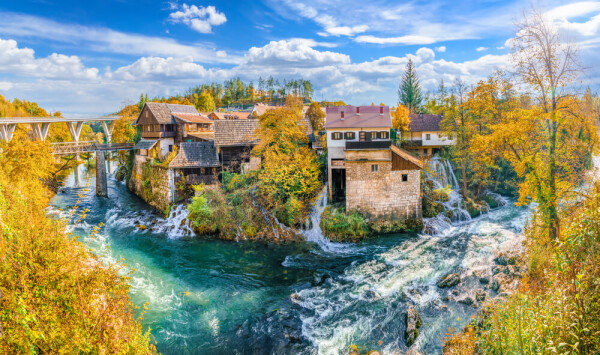
Blessed with forested mountains, historic cities and a stunning coastline, the tiny Mediterranean country of Croatia has yet another reason to boast — it is home to numerous fascinating historical sites.
Let’s delve into the top 10 UNESCO Sites in Croatia to figure out how to plan your trip so you can see them all for yourself.
Plitvice Lakes National Park
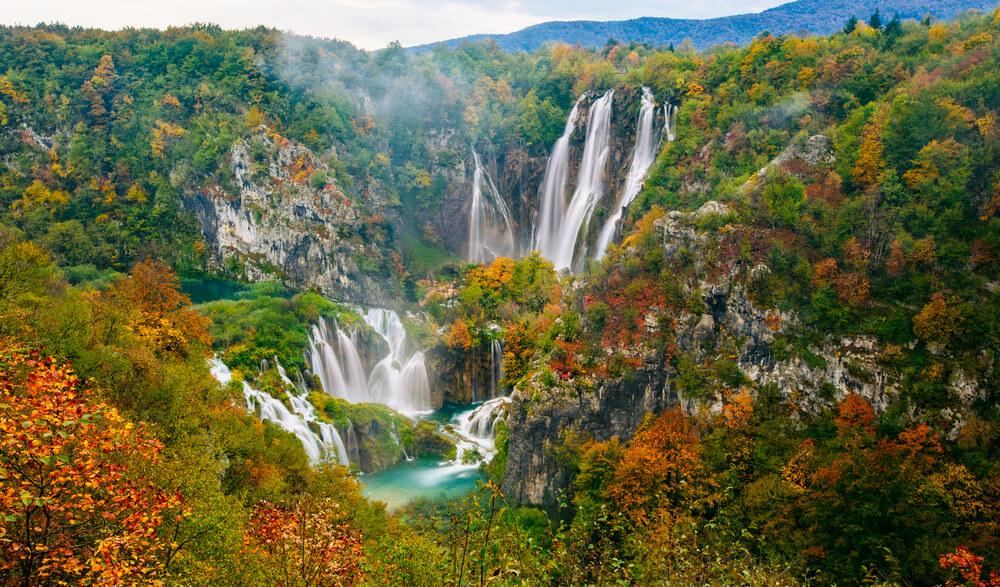
Perhaps the most well-known and iconic of all the UNESCO World Heritage Sites in Croatia, Plitvice Lakes National Park is a natural gem approximately midway along the country’s length.
Nestled in an inland forested valley, this collection of 16 naturally-formed travertine lakes is connected by waterfalls. It’s a visual treat decked out in a stunning array of blues and greens.
You can traverse one of the many trails and charming wooden walkways that bring you up close to the turquoise water and gushing cascades — including Veliki Slap — the biggest UNESCO waterfall in Croatia. As you hike, keep an eye out for rare species such as bears, wolves and lynx that roam the forest.
For a special treat, come in Autumn, when the greenery gives way to an explosion of color from the fall foliage.
Pro tip: To avoid the crowds, arriving early or late will give you the best chance to avoid the day trippers.
How to get there:
You can get to Plitvice Lakes National Park from Zagreb (approximately a 2.5-hour bus ride) and from the coastal city of Zadar (about a 2.5-hour bus ride). You can arrive at either airport and secure ground transportation to take you out into the mountains.
Since there is no train service, you’re best off renting a car or taking a bus.
Old City of Dubrovnik
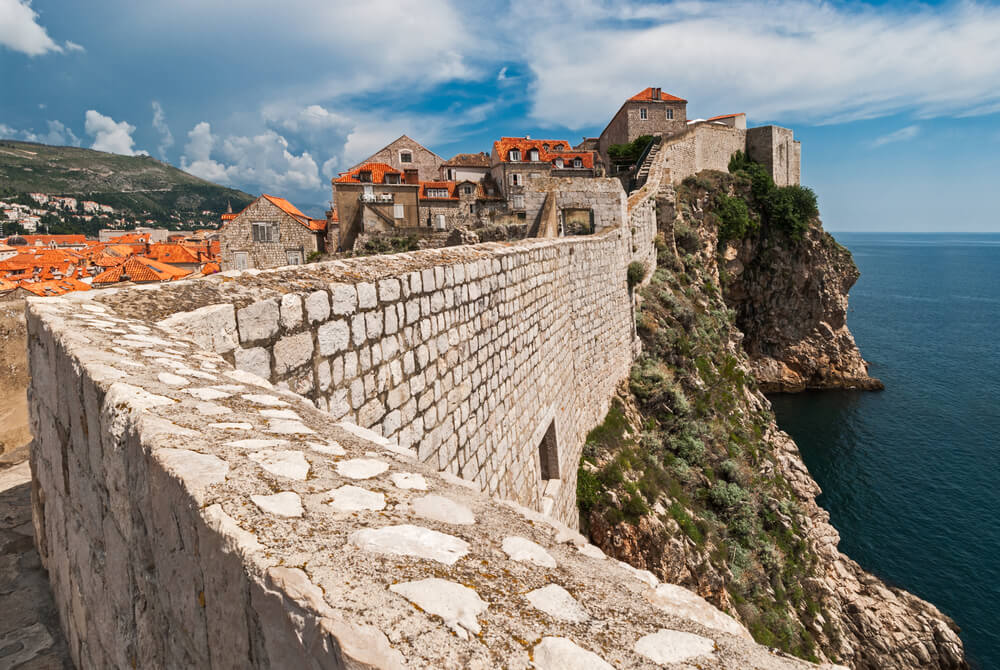
Also known as the “Pearl of the Adriatic,” this historic coastal city is now a bustling cruise ship port and popular film location.
Dubrovnik came into its own during the 13th century as a heavily fortified maritime port. Its ramparts protected the city throughout the succeeding Gothic, Renaissance and Baroque eras, preserving a marvelous blend of period-specific architecture, all under its signature red tiled roofs.
Though damaged by earthquakes and the civil war of the 1990s, the Old City has been restored to its former glory and is one of the most popular UNESCO sites in Croatia.
Inside the area of UNESCO designation, you can explore a wealth of historic buildings, including monasteries, churches and even the old Town Hall. And you’re never far from the fantastic views of the azure Adriatic Sea that beckons just beyond the massive stone walls.
Sure, Dubrovnik has become a bit crowded these days, but touristy places are touristy for a reason. There’s really something worth seeing! Additionally, after the surge in popularity of Game of Thrones, this city has become a must-visit destination for all fans.
Want more about this historic city? This is how you spend a weekend in Dubrovnik.
How to get there:
Dubrovnik is located at the country’s southern tip, along what is known as the Dalmatian Coast. The international airport is the most convenient way to arrive. However, if you prefer slow travel, it can be reached by road from Zagreb and from Zadar. And you can even reach it via a cruise ship if that’s your preferred method of transport.
Historical Complex of Split with the Palace of Diocletian
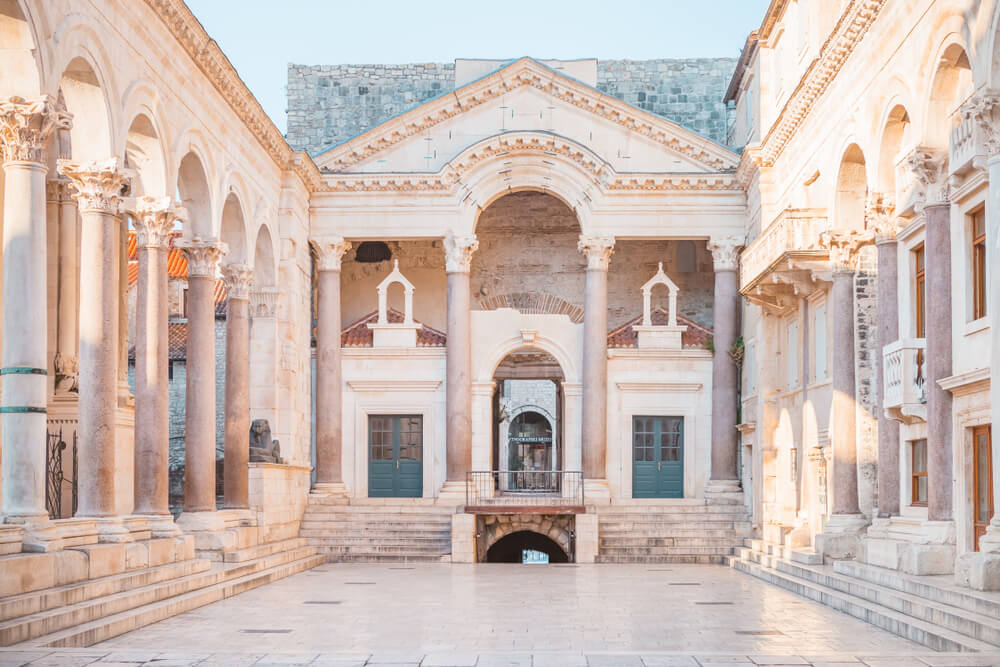
Situated just a little south of the midway point along Croatia’s gorgeous and island-riddled coastline is the historic city of Split.
The city’s importance dates back to the third century of our Common Era, where it was (and still is) the home of Roman Emperor Diocletian’s palace and fortress. The remaining structures are not the only remnants of this ancient time — many historic buildings built in later periods contain stone repurposed from the original palace.
Within the historical complex, you can take in a mausoleum, cathedral, and other medieval structures that have endured the test of time. The result is a charming city brimming with history (and tourists) around nearly every corner.
Split is also a great base of operations for visiting some of the lovely islands that line the coast, such as Brac and Hvar (home of the Stari Grad Plain) or even the old city of Trogir — another UNESCO World Heritage Site just down the road — making for easy and scenic day trips.
If you’d rather stick to town, stroll along the Riva Boardwalk for loads of charm or head out to the lovely waters of Kasjuni Beach. There are plenty of things to do in Split to keep you busy for a few days.
How to get there:
Split has an international airport if you plan to arrive by air.
From Zagreb to Split, it is about a 4 – 5 hour drive; from Dubrovnik, it’s about three to four hours, including the time it takes to pass through the enclave of Bosnia Herzegovina through which the highway passes.
Historic City of Trogir
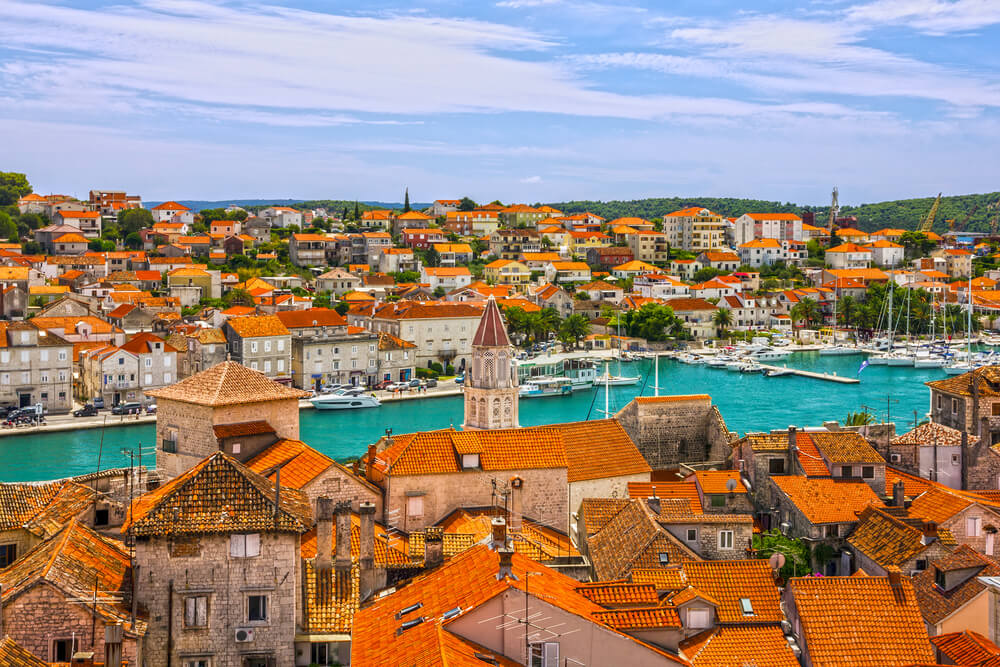
This tiny city has a long history that dates back to the days of Greek influence. Established by Greek colonists in the 3rd century B.C., Trogir has adapted to many notable cultures, including Greek, Roman, Byzantine, and Venetian. Yet somehow, it preserved its medieval character within the layout of its founding Greek roots.
The result is an authentic, well-preserved town that still reflects its ancient past.
Within this World Heritage Site, you can find many historic buildings conveniently located close together in a small area. You can visit the Cathedral of St. Lawrence with its signature bell tower, the Gothic Cipiko Palace, or a walk along Trogir’s riva or waterfront.
How to get there:
The historic city of Trogir is a popular day trip from Split. It’s only about a 30-minute drive.
Stari Grad Plain
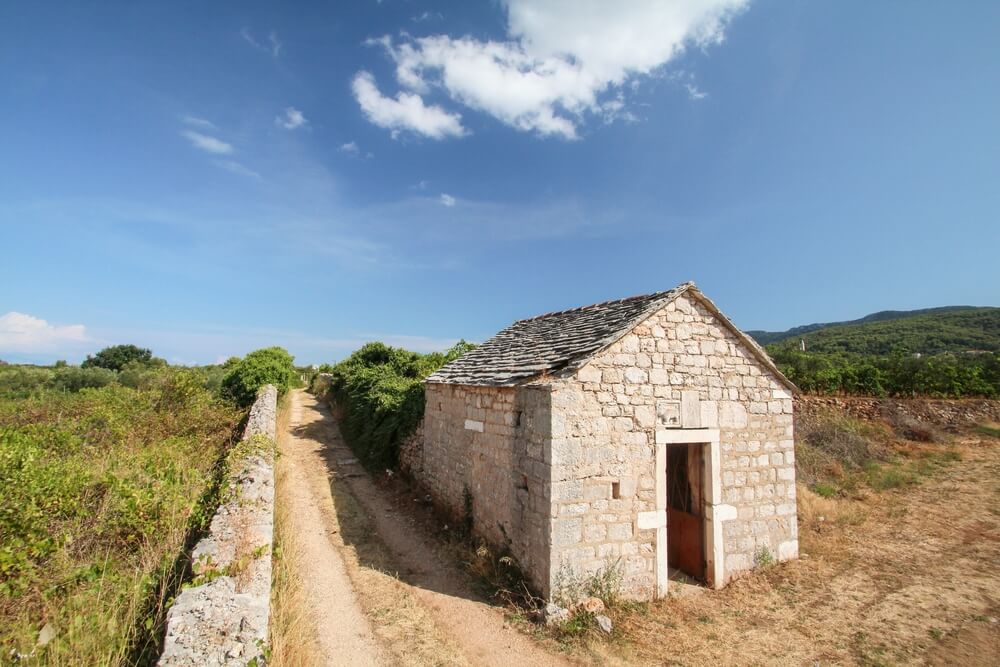
Along the Dalmatian Coast, on the lovely island of Hvar, you will find one of the more unique UNESCO World Heritage Sites Croatia offers.
This fertile plain has been the site of agricultural tradition going all the way back to its colonization by the Greeks in the fourth century B.C. The landscape is home to olive groves and vineyards, demarcated by ancient stone walls and cobbled stone structures called trims that still stand today.
Now also a nature preserve, the Stari Grad Plain offers a genuine glimpse into the agricultural traditions and land division practices of the ancient Greeks.
Stone cisterns dating back 24 centuries are still in use today as the region continues to produce its bounty, uninterrupted since the Greek Empire.
A visit here is a journey back in time and offers an authentic look into daily life from times past.
How to get there:
The Stari Grad Plain is located on the island of Hvar in the Adriatic Sea. Most visitors arrive via a one-hour ferry from Split.
The Cathedral of St. James in Sibenik
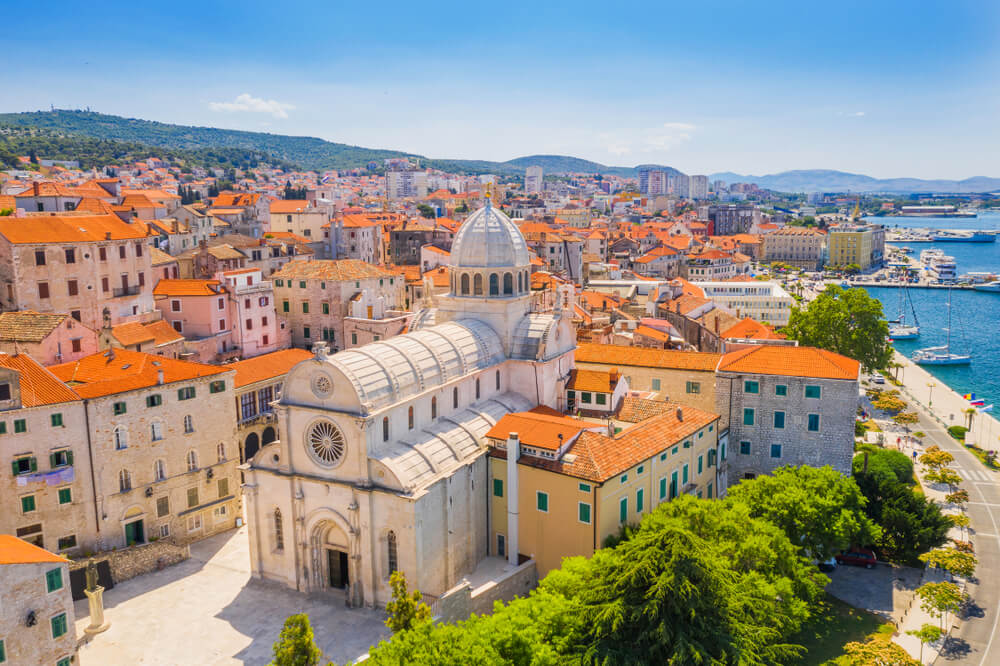
This historic cathedral was built over 100 years between the 14th and 15th centuries.
One interesting thing about this World Heritage site is that the cathedral was designed by a succession of architects from different cultural backgrounds, including Northern Italy, Dalmatia, and Tuscany. The combined effect blends Gothic and Renaissance styles that not only overcame the structural challenges but also created a masterful artistic effect.
The cathedral is made out of stone and, for its time, was an impressive 38.5 meters long (126.3 feet) and 14 meters wide (46 feet). The highest point is 32 meters (105 feet) off the ground, making it a recognizable landmark in Sibenik.
A close-up view reveals ornate sculptures depicting religious scenes adorning the exterior and interior sections. Fans of architecture and art will not want to miss this unique site.
While in town, you’ll also want to check out the Fort of St. Nikola, which is also on the World Heritage List (more on that later).
How to get there:
Once again, reaching the coastal town of Sibenik from Split is the easiest; it’s only about an hour away.
However, Zadar is another reasonable possibility.
Just a short ride inland from the Sibenik Cathedral Croatia UNESCO Site is Krka National Park — a gorgeous landscape of forest and waterfalls.
Stecci Medieval Tombstone Graveyards
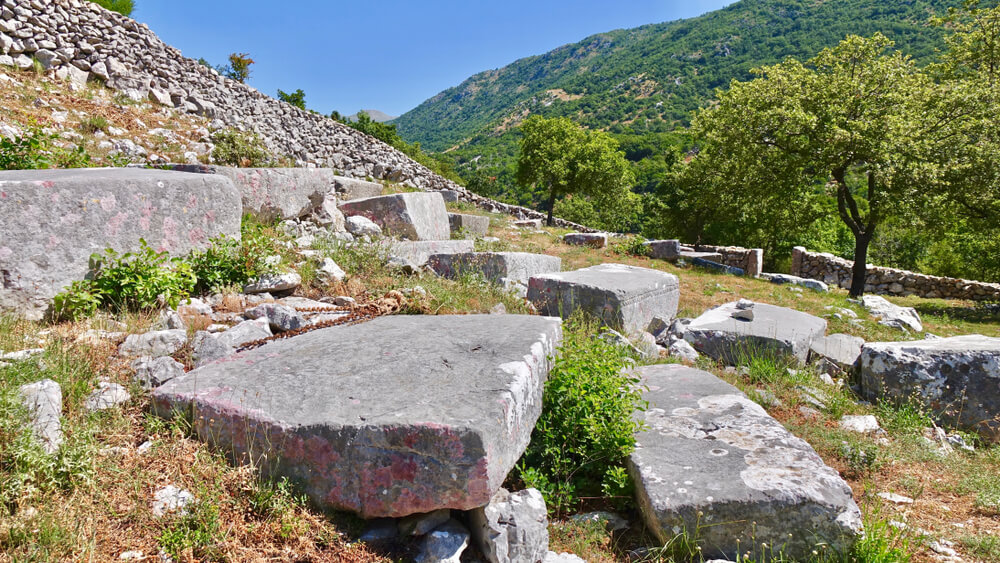
This World Heritage Site transcends national borders, with examples spread across Croatia, Bosnia Herzegovina, Serbia, and Montenegro.
In Croatia, the sites are located in the southern and central regions of the country, specifically in Cista Velika and Konavle.
The cultural significance of these sites is the stecci, monolithic tombstones dating back to medieval times. These monuments testify to Southern Europe’s religious and artistic traditions and were influenced by multiple cultures during that period.
Ultimately, this World Heritage Site is made up of a composite of 28 sites, with a total of 4,000 tombstones. Visitors can admire the inscriptions, sculptures, and striking size of many of these stone monoliths.
How to get there:
If you are solely looking to visit the stecci, having your own wheels is your best bet. To really get a sense of them all, plan on taking a detour into Bosnia Herzegovina, which has the lion’s share.
Ancient and Primeval Beech Forests of the Carpathians and Other Regions of Europe
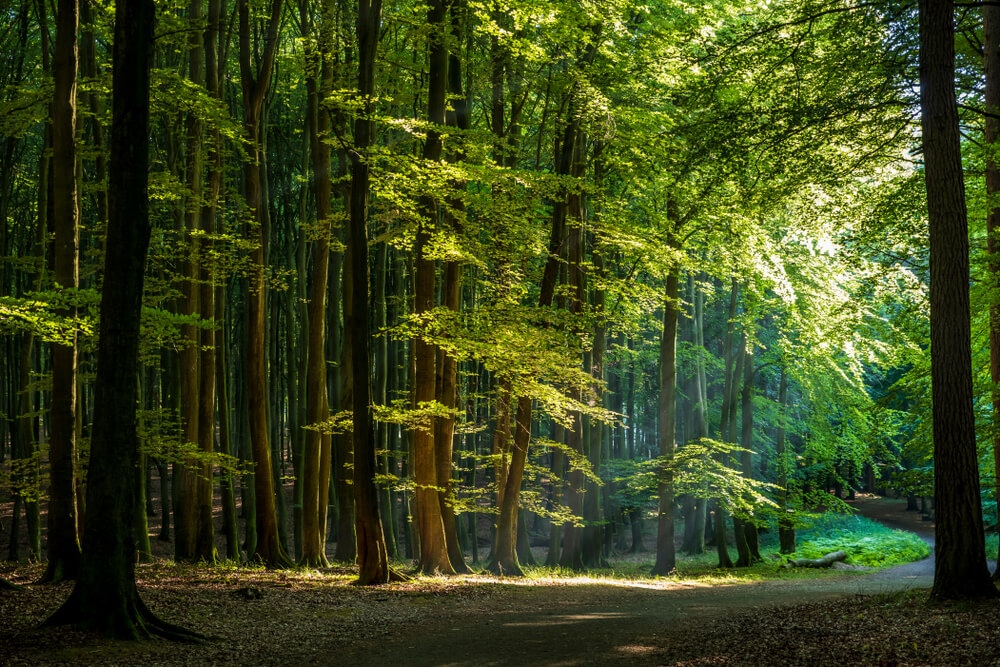
Like the Stecci Tombstone Graveyards, the Beech Forests of the Carpathians is also a composite site made up of 94 sites spread across 18 European countries.
As the name suggests, the sites are noteworthy for their ancient beech forests that continue to dominate the European continent.
The Croatian national park UNESCO designated as a prime example of such a forest is Paklenica National Park, just northeast of Zadar (approximately 47 kilometers/29 miles).
Here, you’ll not only explore the beech forests that led to its designation, but you can try your hand at scaling two mountain peaks that rise to over 1700 meters (5,577 feet) and explore the natural cave system onsite.
How to get there:
By far, Zadar is your best base of operations. Buses or rental cars are the best options for exploring the site independently.
Episcopal Complex of the Euphrasian Basilica in the Historic Centre of Poreč
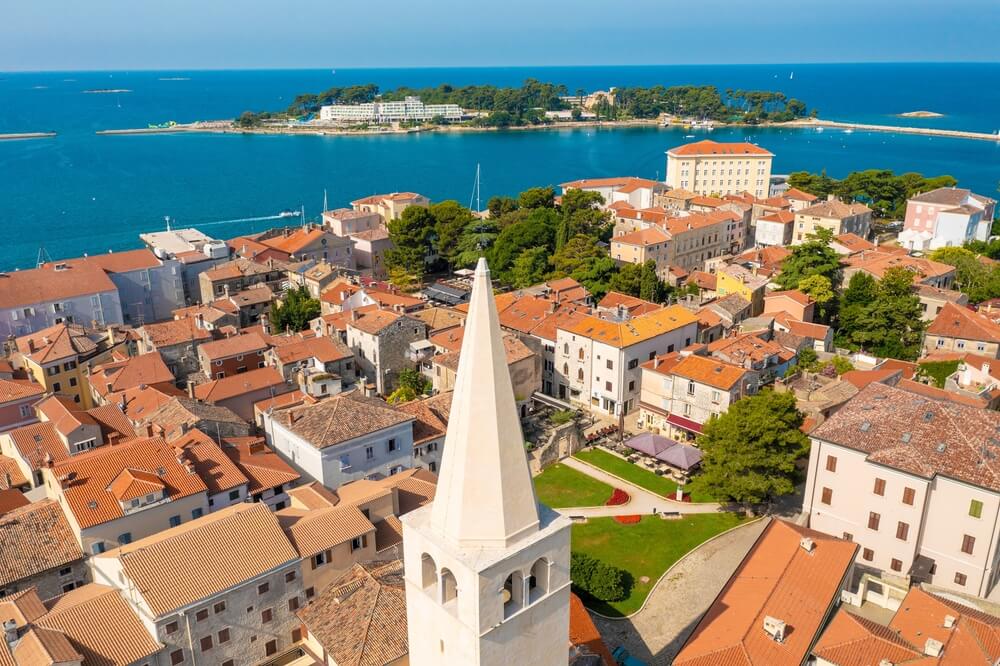
Once you make it past the fancy title, you have a well-preserved example of a religious complex from the early days of Christendom. In fact, it is considered the most complete complex of its type to have survived to our time.
Located in Poreč — a summer resort on northwestern Croatia’s Istrian Peninsula — students of religious history and architecture will be amazed by the intact basilica and other architectural and artistic features.
How to get there:
The nearest city of notable size in Croatia is Rijeka. It’s only about 1.5 hours by bus.
However, it’s just as easy to arrive from Trieste, Italy, after cutting through the tiny coastline of Slovenia.
Venetian Works of Defence between the 16th and 17th Centuries: Stato da Terra – Western Stato da Mar
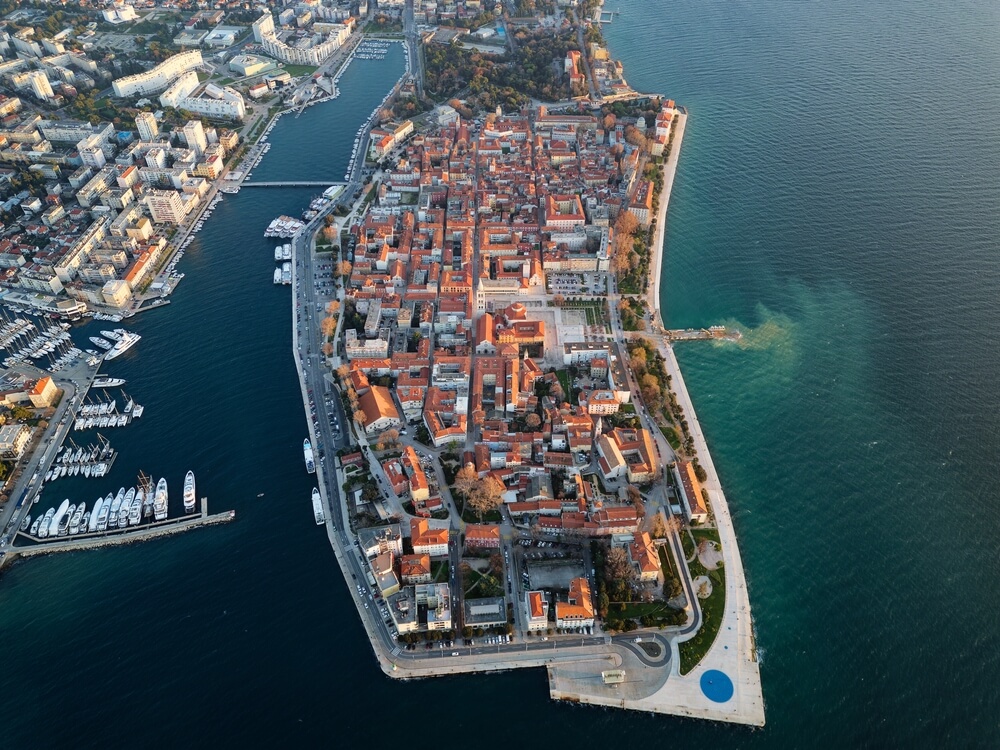
Spreading from Northern Italy across the Adriatic Coast is this composite World Heritage Site that harkens back to Venice’s heyday as the undisputed ruler of the Silk Road.
Within Croatia are several examples of these earthen and stone fortifications that protected the Venetian Republic from invaders. These bastions incorporate various elements that made them quite formidable in their time.
According to UNESCO, Zadar, Croatia, is home to a series of defense works deemed worthy of preservation.
In Sibenik, you can also visit the Fort of St. Nikola for an example of this unique architectural arrangement.
How to get there:
Obviously, the Zadar defense works are in Zadar, which has its own airport and is well connected with other forms of transit from major cities in Croatia, such as Zagreb and Split.
For Sibinek, you could visit as a day trip from Zadar or start off in Split for a slightly shorter ride.
Map of the Top 10 UNESCO Sites in Croatia
To aid in visualizing your potential itinerary, this map will give you an idea of the geography and distances involved. And it’ll help you find the sites that best fit your travel plans.
A few final words about Croatia’s UNESCO Sites
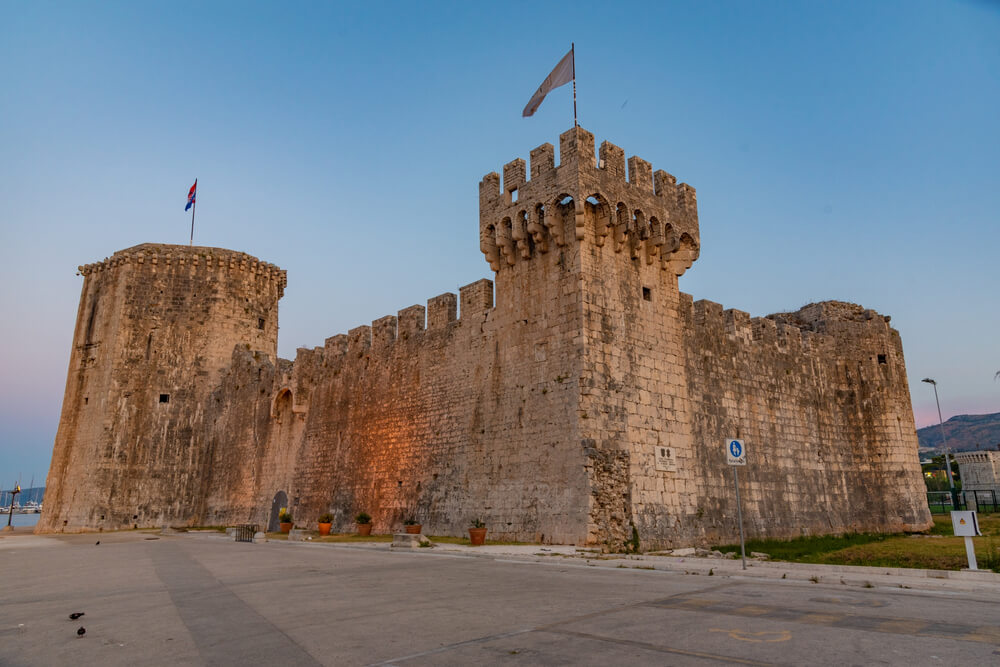
Croatia is far more than a collection of quaint beach towns and popular film locations.
The natural, cultural and historical value it contains is a gift to the world that UNESCO has seen fit to recognize and preserve. So why not include one or more of the top 10 UNESCO Sites in Croatia on your next itinerary for a deeper understanding of what makes this corner of the world so special?
If you are still trying to plan your trip, this 10-day Croatia itinerary will help.
FAQ
There are ten officially recognized UNESCO World Heritage Sites in Croatia, though several of them are part of larger composite sites that span multiple countries in the region.
Traveling throughout Croatia is pretty easy, thanks to the country’s small size. A rental car will give you the most freedom, but there is a train service between select cities. And buses are often a good alternative to the hassle of navigating the roads yourself. If you want to visit any of the gorgeous islands that line the Croatian coast (and you absolutely should!), be prepared to take a ferry.
Yes, Croatia is considered a very safe place to visit. However, increased caution against pickpocketing is advised in crowded areas worldwide, including Croatia.