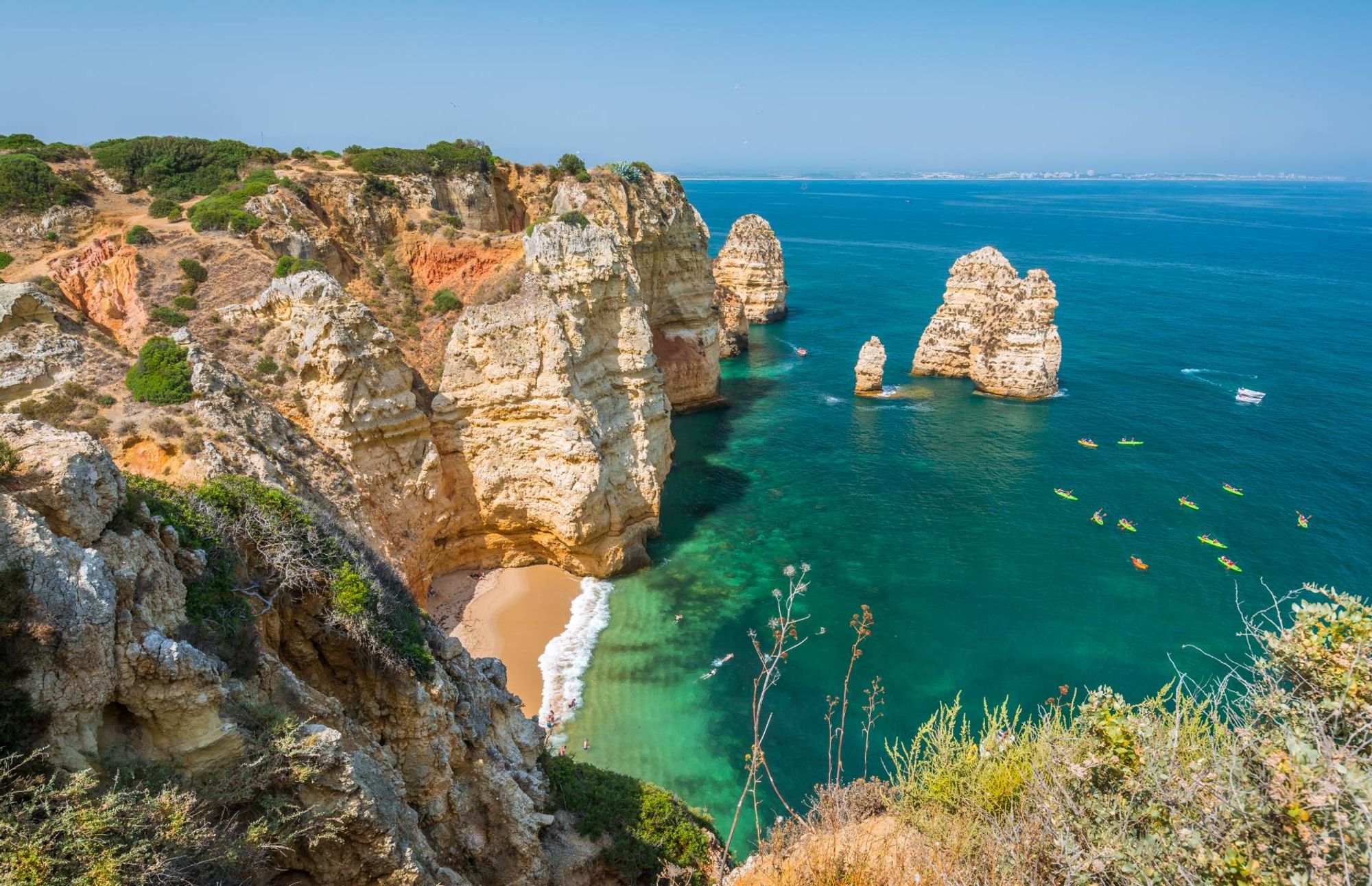


Book train, bus, flight, or minivan tickets in
Portugal
- Book online with local operators
- We're here for you 24/7
- Stories by travelers, for travelers


Popular routes
Lisbon to Lagos
Lisbon to Madrid
Porto to Aveiro
Fatima to Lisbon
Lisbon to Porto
Porto to Lisbon
Madrid to Lisbon
Faro to Albufeira
Faro to Lagos
Lisbon to Albufeira
Lagos to Faro
Porto to Fatima
Portugal Travel Guide: Everything You Need to Know
Discover the beauty of Portugal with our comprehensive travel guide. Learn about Portugal's welcoming weather and the ideal seasons for your visit. Find practical advice on transportation options to explore this charming country with ease. Explore vibrant cities, stunning beaches, and historic sites that make Portugal a must-visit destination. Taste delicious traditional foods and uncover secret spots only locals know about.
Weather and Best Time to Visit
Lisbon & Central Portugal: May-June and September-October offer pleasant temperatures (20-25°C/68-77°F) with fewer crowds. July-August brings hot weather (30°C+/86°F) and peak tourism.
Algarve (Southern Coast): June-September provides perfect beach weather with minimal rainfall. April-May and October offer comfortable temperatures for sightseeing with fewer tourists.
Porto & Northern Portugal: June-September brings warm, mild weather (20-25°C/68-77°F). May and October offer comfortable conditions with occasional rainfall, ideal for wine country tours.
Madeira: Year-round pleasant climate with April-May featuring beautiful spring flowers. September-October offers warm temperatures (23-25°C/73-77°F) without summer crowds.
Azores: June-September provides the most reliable weather for outdoor activities, with temperatures around 23-25°C/73-77°F April-May showcases stunning landscapes with blooming hydrangeas.
Traveling by Season
The high season (June-August) brings temperatures between 24-35°C/75-95°F, with coastal areas offering cooler relief. Lisbon and Porto are crowded with tourists, and Algarve beaches reach full capacity. Expect to pay 30-50% more for accommodations than in the low season, with the best places booking months ahead. All services run at full capacity, but with significant crowds.
The weather is consistently sunny and dry with little rain, though inland areas can experience heat waves exceeding 38°C/100°F. You'll face minimal weather disruptions but considerable tourist congestion during this time.
The low season (November-February) sees far fewer visitors, with temperatures between 7-18°C/45-65°F. Rain is frequent, especially in northern Portugal, with December and January having 12-15 rainy days monthly. Accommodation prices drop by 40-50%, with plenty of availability. Many coastal businesses close, particularly in the Algarve. Weather-related travel delays are more common, especially in mountainous areas.
Despite the rain, Portugal's mild winters still allow for comfortable sightseeing with much smaller crowds at major attractions.
The shoulder seasons (March-May, September-October) offer the best balance: comfortable temperatures (15-23°C/60-75°F), fewer tourists, and better prices. Spring features flowering landscapes with some showers, while fall provides warm sea temperatures and harvest celebrations. Prices are typically 15-25% lower than the high season, with good availability. The weather is generally reliable, with moderate rainfall in spring.
These months combine comfort, affordability, and accessibility, with most services operating without summer crowds.
How to Get to Portugal
Portugal's airport network serves millions of travelers annually. Lisbon Airport (Humberto Delgado) is the country's main hub, handling over 30 million passengers yearly who come to explore the capital city.
Porto Airport ranks as the second-busiest entry point in northern Portugal, providing access to the city and its historic port wine cellars. Travelers heading to southern Portugal typically arrive at Faro Airport, which serves as the gateway to the Algarve coast and nearby destinations including Lagos.
Funchal Airport in Madeira features a distinctive runway partially constructed on stilts over the ocean, requiring specialized pilot training. In the Atlantic, Ponta Delgada Airport connects the Azores archipelago to mainland Portugal and international destinations.
These airports efficiently link major Portuguese cities, Lisbon, Porto, Faro, and Braga, to the rest of the world, providing convenient access to Portugal's cultural attractions and landscapes.
Cross-Border Travel to Portugal
There are multiple ways to reach Portugal, with options to suit different preferences and budgets. Here are the main transportation methods:
Bus from Spain: ALSA and FlixBus operate regular coach services between Spain and Portugal. The Madrid to Lisbon route takes approximately 8 hours. These buses typically offer WiFi and reclining seats for comfort during the journey. As you cross the border near Badajoz, you'll notice the landscape changing from Spain's drier terrain to Portugal's greener scenery.
Train from Spain: The Lusitania night train connects Madrid and Lisbon with private sleeper cabins available. Board in Madrid in the evening and arrive in Lisbon the next morning. Daytime trains offer scenic routes through the Alentejo region, passing through traditional villages and countryside not visible from highways. All Spain routes.
Ferry from the UK: Ferries operate between Plymouth and Santander (Spain), taking approximately 24 hours to cross the Bay of Biscay. Be prepared for potentially rough seas. Motion sickness medication is recommended. After arriving in northern Spain, you'll need to drive or take other transportation to reach the Portuguese border. The coastal route offers beautiful views of the Cantabrian coastline. All UK routes.
Ferry from Morocco: The crossing between Tangier and Tarifa takes about one hour. On clear days, you can see both Europe and Africa simultaneously. Allow at least an hour for immigration procedures on the Spanish side before continuing to Portugal. All Morocco routes.
How to Get Around
Getting around Portugal connects travelers to its landscapes and stories. Trains wind through countryside villages, letting passengers see daily Portuguese life unfold through the windows. Buses from Rede Expressos link towns large and small without emptying wallets. When time matters, flights between Lisbon and Porto save hours for more exploration.
Renting a car opens up coastal roads in the Algarve and quiet Alentejo backroads where schedules don't exist. Ferries carry travelers to the Azores islands or across Lisbon's Tagus River, offering different perspectives of the capital.
In older quarters where streets narrow to walkways, minivans and tuk-tuks navigate passages that cars cannot access. Lisbon and Porto have metro systems that locals depend on daily. The city's funiculars and trams serve practical purposes while telling transportation history. Lisbon's Tram 28 carries passengers through neighborhoods just as it has for generations.
Portugal's transportation network connects more than destinations; it connects experiences, whether between busy cities or through quiet neighborhoods where Portuguese daily life continues.
Food Scene
Essential Local Dishes
- 1. Bacalhau (salt cod): In Lisbon, cooks transform this humble preserved fish into something that tells Portugal's seafaring history in each bite. The fish arrives at your table tender, not salty as newcomers might expect.
- 2. Pastéis de Nata: Locals line up for these custard tarts still made from a centuries-old monastery recipe. The crackle of the pastry gives way to warm custard that's worth the powdered sugar that inevitably ends up on your clothes.
- 3. Francesinha sandwich: In Porto, this sandwich doesn't just feed you, it challenges you. Layers of meat tucked between bread, covered with melted cheese, and a tomato-beer sauce. People talk about it for years after visiting.
Food Markets & Street Scenes
- Time Out Market (Lisbon): Under one roof, Portugal's food story unfolds through the hands of cooks who have refined dishes passed down through generations.
- Bolhão Market (Porto): Vendors who have sold here for decades now work in the refreshed historic space, calling out to customers and sharing cooking tips along with their produce.
- Mercado dos Lavradores (Funchal, Madeira): Fruits you've never seen before await tasting, and fishmongers display the morning's catch that was swimming just hours earlier.
Regional Specialties
- North: Caldo Verde soup warms during chilly Atlantic evenings, while summer brings grilled sardines that make the streets smell like cookouts.
- Alentejo: Migas transforms leftover bread into a hearty meal with pork, telling the story of a region where nothing goes to waste.
- Algarve: Cataplana seafood stew simmers in a special copper pot, opened at the table to release aromas that have been building for hours.
Hidden Gems
1. Azenhas do Mar, Sintra
On Portugal's coast, a small village clings to cliff sides like it grew there naturally. In Azenhas do Mar, white houses step down toward the sea, where a pool formed by rocks fills with ocean water. People swim here while waves crash just beyond the natural barrier. The village stays quiet during May-June, the weather feels just right then, and you won't bump elbows with other visitors like in July or August.
As evening approaches, the restaurants perched at the cliff's edge fills with people watching the sun sink into the Atlantic. The food tastes better with that view. To get there, drive 40 minutes from Lisbon, or take the train to Sintra and catch a local bus. A taxi from Sintra takes about 15 minutes if you're tired after exploring.
2. Foz do Arelho, Caldas da Rainha
At Foz do Arelho, nature can't make up its mind. On one side, the Óbidos Lagoon sits still and warm. On the other hand, Atlantic waves roll in against golden cliffs. Children paddle in the calm lagoon waters while more adventurous visitors grab surfboards and head toward the waves.
The water stays warm through September, and the summer crowds have gone home by then. From Lisbon, the drive takes about an hour. You can also catch a bus to Caldas da Rainha, then connect to local transport for the final stretch to where the lagoon meets the ocean.
Scenic Routes
Portugal tells its story through roads that meander along coastlines, climb through valleys, and connect centuries-old villages. These five routes reveal the country's character through terrain that changes with each turn:
Porto to Pinhão: The train climbs from Porto into the Douro Valley, where vineyards form green and brown steps up the hillsides. In September, workers dot the slopes, harvesting grapes, while the river below catches the sunlight. The windows frame a countryside where families have made wine for generations.
Lisbon to Sintra: Just outside the city streets, the landscape transforms. The train passes walls covered in tiles, then woods thick with trees, before arriving at Sintra with its stone palaces. In spring, pink and white flowers line the paths between buildings that seem borrowed from storybooks.
Faro to Lagos: The Algarve coast reveals itself through the train window. Limestone cliffs drop to blue water, small towns with white buildings, and beaches tucked into coves. Even in winter, light reflects off the water, but summer brings the full blue-and-gold contrast of sea and sand.
Cascais to Cabo da Roca: The bus climbs from this fishing-town-turned-resort toward cliffs where the land ends abruptly. In October, when summer crowds have gone, the wind carries salt spray up from the Atlantic below. The lighthouse stands as the last human mark before the ocean stretches to America.
Portimão to Sagres: The western Algarve shows a wilder face than its eastern counterpart. Buses connect fishing villages and pass cliffs where seabirds nest. In late March, yellow and purple flowers grow beside roads that lead to beaches where fishermen launch boats as they have for centuries.
Events, Festivals and Local Markets
At the São João Festival in Porto, people tap each other with plastic hammers while laughing through the streets. Paper lanterns float into the night sky as locals and visitors dance until sunrise on June 23-24. The smell of grilled sardines fills the air.
The Feira de São Mateus transforms Viseu each August and September. Since 1392, this gathering has brought people together for music, dancing, and plates of hearty regional food. Children run between game stalls while grandparents share stories of fairs from decades past.
In Viana do Castelo, the Festas da Nossa Senhora da Agonia fill streets with gold-adorned women carrying baskets on their heads. Their handmade costumes represent centuries of craftsmanship. The August procession winds through narrow streets as families watch from balconies.
When the sun sets over Zambujeira do Mar, MEO Sudoeste comes alive. Thousands gather in early August, camping under stars between concerts. Bass notes carry across fields as new friendships form in the warm summer nights.
Best Places to Visit
1. Lisbon
Lisbon tells its story through the clanging of yellow trams that climb steep cobblestone streets. The capital city reveals layers of history in every corner. Roman ruins stand near buildings covered in hand-painted tiles, while modern life unfolds in riverside plazas. From the heights of São Jorge Castle, the red rooftops spread out below like a patchwork blanket reaching toward the Tagus River.
Spring and fall bring gentle temperatures that make wandering the narrow alleys of Alfama more comfortable. During these months, locals reclaim their city from summer visitors, creating a more relaxed atmosphere.
The soul of Portugal emerges at night in small Alfama taverns where fado singers perform weekly, their voices telling stories of love and longing. Art spills onto the streets during "Artes à Rua" nights each month, while the Berardo Collection Museum houses contemporary works worth exploring. The CCB cultural center fills evenings with music and theater performances throughout the year.
-Direct flights to Lisbon Airport from major international cities
-Train connections from Madrid and other European cities (with transfers)
-Cruise ship arrivals at Lisbon Port for Mediterranean itineraries
2. Porto
The Douro River cuts through Porto, with centuries-old buildings climbing the steep banks on either side. In the medieval center, narrow streets open unexpectedly onto plazas where children play and elders chat on benches. The massive iron Dom Luís I Bridge connects the city to Vila Nova de Gaia, where port wine ages in cool cellars waiting to be tasted.
Spring and early autumn transform Porto into a comfortable playground — warm enough for riverside meals but cool enough to climb the city's many hills without overheating.
Weekends bring local artisans to markets along the Douro, selling handmade goods and regional foods. Port wine cellars welcome visitors daily, sharing the stories behind their creations before offering samples. As evening falls, Casa da Música fills with the sounds of classical performances, while the Serralves Museum provides a home for thought-provoking contemporary art year-round.
- How to get to Porto
- -International flights to Francisco Sá Carneiro Airport (OPO)
- -Train service from Lisbon (approximately 3 hours)
- -Bus connections from various European and Portuguese cities
3. Faro
Beyond the airport gates, Faro keeps secrets worth discovering. Behind medieval walls, the old town (Cidade Velha) preserves a quieter Portugal in its cathedral square and orange tree-lined streets. Just outside town, the Ria Formosa lagoon system creates a constantly shifting landscape where birds wade and small boats navigate shallow channels.
From May through October, the ocean warms enough for swimming, with June and September offering pleasant temperatures without the crowds that fill July and August.
Mornings in Faro begin with farmers selling fresh produce in the old town markets, their tables full of items grown just miles away. Boats depart throughout the day to explore the protected waters of Ria Formosa, where nature unfolds at its own pace. Evening walking tours reveal the stories behind Faro's architecture as the lowering sun turns building facades golden. The Municipal Museum keeps the region's history accessible through changing exhibitions that connect the past to the present.
- How to get to Faro
- -Flights to Faro Airport from numerous European destinations
- -Train connections from Lisbon (approximately 3 hours)
- -Car rental for flexibility in exploring the Algarve region
Tips for Traveling to Portugal
VISA & ENTRY
- EU citizens: No visa needed, just an ID card
- Non-EU travelers: Schengen rules apply (90 days visa-free for many nationalities)
CULTURAL ETIQUETTE
- Standard greeting is a handshake; friends exchange two cheek kisses
- People are generally relaxed about time (arriving 15 minutes late is acceptable)
- Wear modest clothing when visiting churches
MONEY MATTERS
- Currency: Euro (€)
- Credit and debit cards are accepted in most places, but keep some cash for smaller shops
- Tipping in restaurants is optional, typically 5-10% if the service was good
HEALTH & SAFETY
- Emergency number: 112
- No specific vaccinations needed for travel
- It's advisable to have travel insurance
- Portugal is generally safe, but be careful of pickpockets in tourist areas
TRANSPORTATION
- Cities have metro and bus networks
- Trains connect major cities across the country
- Uber and similar services operate in larger cities