

Book minivan, car, train, or flight tickets in
Tunisia
- Book online with local operators
- We're here for you 24/7
- Stories by travelers, for travelers


Popular routes
Hammamet to Tunis
Tunis to Hammamet
Sousse to Tunis
Tunis to Sfax
Tunis to Djerba
Djerba to Tunis
Djerba to Hammamet
Sousse to Djerba
Tunis to Marseille
Monastir to Tunis
Tunis to Mahdia
Tunis to Gabes
Tunisia Travel Guide: Everything You Need to Know
Discover the beauty of Tunisia with our comprehensive travel guide. Learn about Tunisia's delightful weather patterns and the ideal times to plan your visit. Find helpful tips on transportation options throughout the country. Explore top cities, famous attractions, and mouthwatering local dishes you simply must try. Uncover hidden gems that most tourists miss for a truly unforgettable Tunisian experience.
Weather and Best Time to Visit
Northern Tunisia (Tunis, Bizerte): April to June and September to October offer mild temperatures, perfect for exploring historical sites like Carthage. July and August can be hot, but ideal for beach activities.
Coastal Regions (Hammamet, Sousse, Monastir): May to October provides warm weather and pleasant sea temperatures. Peak summer (July-August) brings higher temperatures and crowds.
Saharan South (Douz, Tozeur): October to April is the most comfortable time for desert exploration. Avoid summer months (June-September) when temperatures regularly exceed 40°C (104°F).
Central Tunisia (Kairouan, Sbeitla): Spring (March-May) and autumn (September-November) offer comfortable conditions for sightseeing with temperatures between 20-30°C (68-86°F).
Djerba Island: April to November provides excellent beach weather, with September to October offering warm seas without peak season crowds.
Traveling by Season
The High Season (June-August)
Tunisia's coastlines become crowded during the summer months. Temperatures reach 30-40°C (86-104°F) with almost no rain and constant sunshine. Coastal areas like Hammamet and Sousse benefit from cooling sea breezes.
Expect to pay 30-50% more for accommodations, and popular resorts often sell out completely, making advance reservations necessary.
Beaches and tourist sites get very crowded, especially during July and August. Transportation costs increase, and tour operators charge premium rates. The weather is generally reliable, though occasional sirocco winds from the Sahara can bring uncomfortably hot, dusty conditions.
The Low Season (November-February)
Tourist numbers drop significantly in winter. Coastal areas average 10-18°C (50-64°F), while inland and southern regions can get quite cold at night. The rainiest months are December and January, with northern areas seeing 8-10 rainy days monthly.
Accommodation prices drop 40-60%, though many coastal properties close entirely.
Desert tours remain comfortable with pleasant daytime temperatures. Many restaurants and shops in beach towns reduce their hours or close for the season.
Public transportation runs less often, particularly to smaller towns. Flight delays or cancellations can occur during Mediterranean storms, most commonly in December and January.
The Shoulder Seasons (March-May & September-October)
These months offer the best combination of good weather and reasonable prices:
Spring (March-May) brings temperatures of 18-28°C (64-82°F) and blooming landscapes, with some rain possible in March and April.
Fall (September-October) features warm sea temperatures and gradually cooling air.
Prices run 15-30% lower than peak season, with good availability and fewer tourists. Most attractions and businesses remain open with shorter wait times. The weather is typically stable, though spring can bring occasional rain showers, especially in northern Tunisia.
How to Get to Tunisia
When travelers arrive in Tunisia, they typically enter through one of several key airports that serve different regions of the country.
Tunis-Carthage International Airport is the main gateway, located near the capital city of Tunis. This airport is conveniently situated just outside the city center, providing easy access to Tunisia's political and cultural hub.
Enfidha-Hammamet International Airport serves visitors heading to the popular coastal destinations of Hammamet and Sousse. This centrally located airport provides efficient access to many of Tunisia's most visited beach resorts.
Monastir Habib Bourguiba International Airport connects travelers to the central coastal towns of Monastir and Mahdia. The airport offers quick transportation to these Mediterranean coastal communities.
Djerba-Zarzis International Airport serves Djerba Island and southern Tunisia. This facility is the main entry point for those interested in exploring Tunisia's southern regions and the island's unique attractions.
Additional smaller airports include:
- Sfax-Thyna Airport, which serves Sfax, Tunisia's second-largest city.
- Tozeur-Nefta Airport, which provides access to the desert regions of Tozeur and Nefta
These airports collectively form Tunisia's air transportation network, offering multiple entry points to different regions of the country.
Cross-Border Travel to Tunisia
Tunisia is located at the northern tip of Africa on the Mediterranean Sea. While flying is the most common way to reach Tunisia, several alternative transportation options can provide a more immersive travel experience.
- Bus from Algeria: Traveling overland from Algeria offers an authentic North African experience. Be prepared for basic bus conditions and potentially lengthy border crossings that may take longer than scheduled. Remember to bring sufficient water and exercise patience during the journey. More Algeria routes.
- Ferry from Morocco: The ferry from Tangier to Tunisia takes approximately 30 hours across the Mediterranean. Consider booking a cabin for comfort, especially for overnight travel when deck temperatures drop. The journey provides beautiful views, particularly as you approach the Tunisian coast. Other Morocco routes.
How to Get Around
In Tunisia, people move from place to place in ways that tell stories of their own. Trains run by SNCFT connect the major cities, with cool air flowing through the carriages as they roll along coastal tracks. Outside the train windows, scenes of Tunisian life unfold one after another.
- Connections within Tunisia: Tunisia has a reliable coastal rail network connecting major destinations. Key routes include Hammamet to Tunis, Tunis to Sousse, and Tunis to Sfax. Second-class accommodations are generally adequate, though first-class offers air conditioning, which is valuable during summer travel. Private and shared minivans also cover these routes.
Buses reach further, climbing into hills and stopping at towns where trains never venture.
Then there are the louages — shared minivans where travelers sit shoulder to shoulder with locals. These don't leave on a schedule, only when every seat fills up. Try a louage journey at least once. As you squeeze in beside families, workers, and students, you'll hear conversations, share snacks offered by fellow passengers, and see Tunisia through local eyes.
In cities, yellow taxis zip through streets, their meters ticking away at prices that won't empty wallets. Renting a car puts the map entirely in your hands, though navigating the narrow lanes of ancient medinas requires patience and a good sense of humor.
For those drawn to the sea, ferries connect Tunisia's shores to Sicily and mainland Europe, with salt spray and Mediterranean breezes accompanying the journey.
Popular transportation providers:
Food Scene
In Tunisia, each meal tells a story that spans centuries. The food combines Mediterranean, Arabic, and Berber cooking traditions that have merged over generations of family gatherings.
In Tunis, people sit on cushioned benches while servers bring steaming plates of couscous topped with tender lamb.
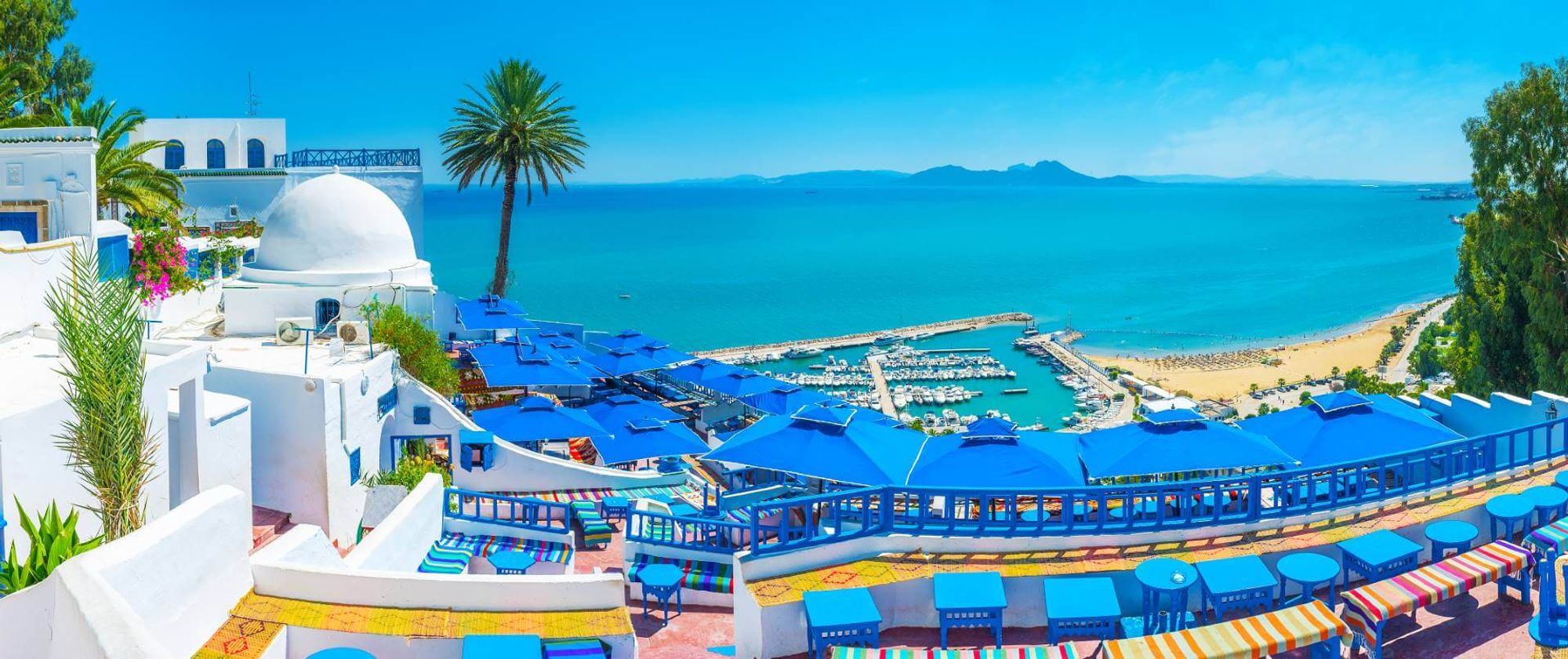
Meanwhile, in the blue and white streets of Sidi Bou Said, cooks fold thin pastry around eggs to make brik, frying them until they crackle when bitten.
Morning light filters through the glass ceiling of Marché Central in Tunis as shoppers select blood oranges, olives, and bundles of mint. Spice vendors measure out harissa paste and caraway seeds.
In Sfax, the narrow lanes of Souk El Attarine fill with the scent of lablabi — hot chickpea soup that vendors serve in bowls with bread chunks, cumin, and olive oil.
Each region guards its recipes carefully. In Hammam Sousse, families prepare ojja by simmering tomatoes and peppers before cracking eggs into the spicy sauce.
On Djerba Island, pots of mloukhiya — a rich beef stew dark with dried jute leaves — simmer all day. Fishermen along the northern coast bring their catch directly to restaurants, where it's quickly transformed into seafood couscous.
Hidden Gems
1. In the heart of Djerba's old town, narrow alleys lead to a bustling market where local artisans work much as their ancestors did centuries ago. Morning light streams through gaps between buildings, illuminating silversmiths as they hammer delicate patterns into bracelets and necklaces. Berber craftspeople arrange their distinctive jewelry on simple cloth displays, prices unmarked and waiting for friendly negotiation.
The market breathes differently Tuesday through Thursday — fewer people, more time to chat with makers, better chances to find something special at a fair price. To get there, join locals in a shared louage van from the island's transport center, or take a taxi for 15-20 dinars from Midoun.
2. Stone houses cling to a rocky hilltop where Berber families have lived for generations in Takrouna Village. From this natural fortress, olive groves stretch toward the distant blue line of the Mediterranean. The village's single café serves glasses of mint tea on a terrace where time seems to slow down as the sun sinks toward the horizon.
Spring brings carpets of red, yellow and purple wildflowers to the surrounding slopes. A taxi ride from Enfidha takes about 30 minutes along winding roads where public buses rarely venture.
3. When winter arrives, so do thousands of birds to Ichkeul National Park, a lake and mountain sanctuary. Flamingos wade through shallow waters, their pink forms reflected perfectly on still mornings. Walking the lakeside path reveals new scenes at every turn, perhaps a flock rising suddenly into the air or a rare species feeding at the water's edge.
Visitors who come between November and February see nature at its most active here. The park sits just 30 minutes southwest of Bizerte by car on the P11 road, or travelers can hire a taxi for the day for 80-100 dinars.
Scenic Routes
Tunisia changes its face with every mile traveled. From salt-sprayed Mediterranean shores to palm-fringed oases, the country unfolds like pages in a storybook.
These five routes show how the landscape transforms before your eyes:
Tunis to Sidi Bou Said: The train hugs the coastline, revealing blue waters that seem to stretch forever. When you arrive, narrow streets wind between white walls topped with blue doors and windows. In April and May, purple flowers spill over walls, and the air smells sweet. The train journey itself becomes part of the memory, and you can watch fishermen casting nets as you pass.
Tabarka to Ain Draham: The bus climbs steadily through forests where sunlight filters through cork oak trees. Each curve reveals another valley spreading below. In autumn, the hillsides turn gold and copper. The mountain air feels different here, cooler and fresher than the coast.
Tozeur to Metlaoui: The "Red Lizard" train dates from 1910 and creaks through canyons where rock walls tower overhead. Winter brings gentle light that makes the stone glow amber and rust-red. Sit by the window and watch shadows play across rock formations shaped by centuries of wind.
Djerba to Matmata: From island palms to underground homes carved into hillsides, this bus journey crosses worlds. Movie fans recognize the landscape from Star Wars films. October temperatures make exploring comfortable. Notice how houses disappear into the earth, keeping cool in summer and warm in winter.
Douz to Ksar Ghilane: Sand stretches in every direction as jeeps navigate between dunes. After crossing what feels like an ocean of sand, Ksar Ghilane appears with its palm trees and warm springs where you can soak under desert stars. Early spring means comfortable temperatures and clear skies.
Events, Festivals and Local Markets
Trumpets blare and saxophones wail as the Carthage Jazz Festival fills the night air in Tunis. Musicians from across the globe gather here, playing everything from traditional jazz to experimental fusion pieces that blend jazz with North African rhythms.
When the Carthage Film Festival comes to Tunis, the city buzzes with filmmakers and cinema lovers. Theater seats fill with people watching stories from across Africa and the Arab world, tales you might never see on mainstream screens elsewhere.
Summer evenings in Tunis mean it's time for the International Festival of Carthage. The ancient stones of historic venues serve as backdrops for performances that range from orchestral concerts to contemporary music. People sit where audiences have gathered for centuries, connecting past to present.
On the island of Djerba, the Djerba Ulysse Festival brings locals and visitors together. Dancers move to age-old rhythms, musicians play instruments passed down through generations, and the island's unique culture takes center stage.
Best Places to Visit
1. Tunis & Carthage
The capital holds stories in every corner. Walking through the medina's narrow alleys feels like stepping into a living history book. Merchants call out greetings, the scent of spices hangs in the air, and centuries-old buildings lean toward each other as if sharing secrets. Inside the Bardo Museum, ancient mosaics tell tales of people who walked these lands thousands of years ago.
Not far away, Carthage's ruins stand as silent witnesses to empires that rose and fell on this land. When the afternoon light hits the blue-and-white buildings of Sidi Bou Said just right, time seems to slow down.
April-May or September-October brings gentle weather — warm enough for exploring without the summer heat that can make midday walks challenging. The evenings cool pleasantly, perfect for outdoor cafés.
The City of Culture comes alive throughout the year with performances that showcase both traditional and contemporary Tunisian arts. During summer evenings at the Carthage Festival, music echoes off ancient Roman stones just as it did centuries ago, though with much different instruments.
- How to get to Tunis and Carthage
- -Direct flights to Tunis-Carthage International Airport from major European cities
- -Ferry services from Mediterranean ports in Italy and France
- -Connecting trains from major Tunisian coastal cities
2. Hammamet
The sea stretches blue to the horizon in Hammamet, meeting a shoreline where children build sandcastles and families spread picnic blankets. Behind the beaches, buildings painted stark white contrast with wooden doors painted Mediterranean blue.
The old medina walls have weathered centuries of salt air, protecting a maze of narrow streets where shopkeepers arrange their wares each morning. Newer areas like Yasmine Hammamet provide modern comforts while keeping the seaside town's character.
Between June and September, the water warms perfectly for swimming. Those who prefer quieter experiences might choose May or October when the beaches have more open space, but the sea remains inviting.
Summer nights at the historic fort transform into concert venues during July and August, with music floating over stone walls. Year-round, the sounds of traditional Andalusian melodies remind listeners of Tunisia's complex cultural heritage, with instruments and rhythms that traveled across countries and centuries.
- -Direct seasonal charter flights to Enfidha-Hammamet Airport (40 minutes from Hammamet)
- -Taxi or private transfer from Tunis (approximately 1 hour drive)
- -Public louage (shared taxi) services from Tunis and other coastal towns
3. Sousse
Morning light brings fishermen back to Sousse's harbor as they have returned for centuries, while the medina awakens around its ancient Ribat fortress. The walls that once protected against invaders now welcome visitors who wander through markets and stop at small cafés. Beyond the historical center, beaches stretch along the coast where families spread umbrellas and children splash in gentle Mediterranean waves.
Visit in May-June or September-October to enjoy warm sea waters without the full intensity of summer heat. These months let you comfortably explore both historical sites and beaches on the same day.
In the Archaeological Museum, Roman mosaics depict everyday scenes from lives lived here nearly two millennia ago. As evening approaches in summer months, musicians set up along the waterfront, playing both traditional tunes and contemporary music as people gather to listen, talk, and watch the sunset paint the harbor.
- -Direct seasonal flights to Monastir International Airport (15 minutes from Sousse)
- -Train service on the main Tunis to Sfax railway line
- -Ferry connections to European ports with onward transport to Sousse
Tips for Traveling to Tunisia
VISA & ENTRY
Most tourists (EU, US, UK, Canada) get 90-day visa-free entry
Valid passport (6+ months)
A return ticket may be requested
CUSTOMS & ETIQUETTE
- Dress modestly, especially at religious sites
- Ramadan: avoid eating/drinking publicly during daylight
- Ask before photographing locals
- Right hand for eating/greeting
MONEY MATTERS
- Currency: Tunisian Dinar (TND)
- Exchange at banks/hotels (illegal to export TND)
- Major cards accepted in cities; carry cash elsewhere
HEALTH & SAFETY
- Emergency: 190 (police), 197 (ambulance)
- Recommended: Hepatitis A, Typhoid vaccines
- Travel insurance essential
- Register with the embassy
TRANSPORTATION
- Louage (shared taxis) between cities
- Metered taxis in urban areas (yellow)
- Rental cars require an international permit