

Book minivan, car, bus, or flight tickets in
France
- Book online with local operators
- We're here for you 24/7
- Stories by travelers, for travelers


Popular routes
Geneva to Chamonix
Paris to Chessy
London to Paris
Paris to Paris
Barcelona to Paris
Milan to Paris
Paris to Amsterdam
Paris to Brussels
Chamonix to Geneva
Geneva to Tignes
Madrid to Paris
Geneva to Annecy
Your questions, Our answers
Which holidays are celebrated in France?
These are the holidays celebrated in France:
- All Saints' Day
- Armistice Day
- Ascension Day
- Bastille Day
- Christmas
- Easter
- Easter Monday
- Feast of Assumption
- Labor Day
- New Year's
- Victory in Europe Day
- Whit Monday
France Travel Guide: Everything You Need to Know
Discover the magic of France with our comprehensive travel guide! Learn about France's weather patterns and the ideal time to visit for your perfect vacation. Find out how to navigate the country easily, whether by train, bus, or car. Explore top cities like Paris and Nice, along with must-try dishes such as croissants and coq au vin. Uncover hidden gems that most tourists miss, giving you a truly authentic French experience.
Weather and Best Time to Visit
Paris and Île-de-France: April to June and September to October offer pleasant temperatures and fewer crowds. The city is magical in spring when gardens bloom and in fall when autumn colors appear.
Provence and French Riviera: May to June and September, when lavender fields bloom and temperatures are warm but not scorching. Avoid August when French holidaymakers flood the coast.
Normandy and Brittany: June to September provide milder weather for coastal exploration with fewer rain showers.
Loire Valley: May to October is ideal for château visits and cycling through vineyards, with September offering wine harvest experiences.
Alps and Pyrenees: December to March for winter sports; June to September for hiking and mountain activities when passes are clear of snow.
Alsace: December for Christmas markets; May to October for wine routes and colorful villages.
Traveling by Season
High Season (June-August)
Summer in France brings peak tourist numbers. Temperatures typically range from 24-29°C (75-85°F) in most regions, with the Mediterranean coast reaching up to 32°C (90°F). Rain is minimal, though mountainous areas may experience occasional thunderstorms.
Accommodation prices increase 30-50% above yearly averages, making advance bookings necessary, especially in Paris and coastal areas. Popular attractions often have lines exceeding two hours. Transportation costs rise, and restaurant reservations become difficult to get.
Despite these challenges, visitors enjoy:
- -Vibrant festivals
- -Long daylight hours
- -Fully operational tourist facilities
Low Season (November-March)
Winter offers a quieter experience across France. Paris temperatures typically range between 2-7°C (35-45°F), while southern France enjoys milder 10-15°C (50-60°F) days. Northern regions see more rainfall, with December being the wettest month. Alpine areas receive snow, sometimes causing transportation delays.
Accommodation rates drop 40-60%, and availability is much better. Many smaller attractions reduce their hours or close completely, particularly in coastal towns.
Visitors can enjoy:
- -Museums without crowds
- -More authentic local experiences
However, prepare for shorter days and possible weather disruptions.
Shoulder Seasons (April-May, September-October)
These intermediate periods provide the best overall value. Spring temperatures range from 13-21°C (55-70°F), while autumn temperatures stay between 10-24°C (50-75°F). October tends to see slightly more rainfall.
Prices are typically 15-25% lower than high season, and making reservations is much easier. Tourist attractions remain fully open but without summer crowds.
Benefits of traveling during shoulder seasons:
- -Reasonable prices
- -Good accessibility
- -Comfortable weather conditions
- -Fewer crowds
Weather can be variable, especially in mountain regions, but major disruptions are rare.
How to Get to France
Airports operate throughout France, serving millions of travelers annually. Paris Charles de Gaulle (CDG), France's largest airport, handles over 76 million passengers per year and offers connections to Paris, Nice, Lyon, and beyond.
Paris Orly Airport, located south of the capital, primarily serves European and domestic routes.
Nice Côte d'Azur Airport provides access to Mediterranean destinations including Marseille, while Lyon-Saint Exupéry Airport connects travelers to the Alps and Bordeaux regions.
In the southwest, Toulouse-Blagnac Airport serves the Airbus manufacturing hub and offers connections to Strasbourg.
Marseille Provence Airport provides entry to the Mediterranean coastal areas and Provence.
These major airports form France's transportation network, making destinations throughout the country accessible by air travel. Each serves as an entry point to different regions of France.
Cross-Border Travel to France
France sits at Western Europe's crossroads, with many entry options beyond airports. Here are practical ways to enter France from neighboring countries:
-
- Bus: The Barcelona to Paris overnight coach takes about 15 hours through the Pyrenees. Modern coaches offer adequate legroom and Wi-Fi. Check the Barcelona to Paris schedule for night departures to maximize sleep time.
- Train: The high-speed connection follows the Mediterranean coast before turning inland, passing through Montpellier. Consider bringing your own food, as dining car options are expensive for what you get.
-
- Train: The Turin to Lyon route passes through impressive Alpine tunnels. On the Geneva to Morzine connection, sit on the right side in winter for the best Mont Blanc views.
-
- Train: Frankfurt to Paris trains travel at 320 km/h (198 mph) through hill country, crossing the border near Strasbourg. For mountain scenery, consider the Geneva to Val d'Isère route.
- Bus: Flixbus operates many routes, including overnight services that reach Strasbourg by morning. Seats recline adequately for sleeping.
-
Ferry options from the UK: Dover to Calais is the quickest sea crossing (90 minutes), while Portsmouth to Caen offers an overnight option.
How to Get Around
When French locals need to reach another city, they often step aboard the TGV trains that zip between Paris and Lyon in just two hours, a journey that would take nearly five by car. These sleek trains connect the country's dots on the map, carrying passengers while the countryside slides past their windows.
In the sprawling labyrinth of Paris, residents disappear down stairways marked with the distinctive "M" sign, emerging across town minutes later via the metro system's 16 interconnected lines. Workers, students, and families navigate this underground network daily, swiping their Navigo cards as they go.
Travelers with limited time might choose to fly between Toulouse and Nice rather than spend a day on ground transportation. Meanwhile, summer visitors line up at ports to board ferries bound for Corsica, where their vehicles will be useful on mountain roads.
Young backpackers and budget-conscious travelers often gather at bus stops before dawn, coffee in hand, waiting for FlixBus or BlaBlaCar Bus to continue their journeys at a fraction of train prices.
Families and friends sometimes pool resources to rent cars, giving them freedom to:
- -Stop at small cheese shops in Normandy
- -Pull over when they spot lavender fields in Provence
In cities, many people grab bicycles, pedaling across neighborhoods instead of descending underground.
For special occasions, groups book minivans to explore wine regions together, while in Paris, people sit side-by-side on Seine river boats, watching the city from a different angle as bridges pass overhead.
Most people find that combining fast trains between cities with local buses, metros and occasional walking creates the most natural way to experience France, just as residents do every day.
For transportation bookings, check out Swiss Tours and BlaBlaCar Bus.
Food Scene
French kitchens tell stories that span centuries.
In Paris, a steaming bowl of coq au vin carries the countryside into the city, while the onion soup warms visitors on chilly evenings, its cheese pulling into long strands with each spoonful. Mornings in France begin with croissants from corner boulangeries, where locals line up as bakers pull fresh batches from ovens before dawn.
The Marché d'Aligre in Paris or Marché Forville in Cannes reveal how French families shop, pointing at the season's first asparagus or debating with cheese vendors about ripeness. Walking down Rue des Rosiers, the aroma of falafel guides hungry travelers, while Marché des Enfants Rouges offers foods that tell tales of France's connections to wider worlds.
Each region keeps its own food traditions:
- -Fishermen's stories swim in every bowl of bouillabaisse in Marseille
- -The hearty cassoulet of Toulouse speaks of cold winters and warm hearths
- -Alsatian choucroute reveals the German border influence
- -Ratatouille in Nice celebrates summer gardens in each colorful spoonful
Hidden Gems
1. Parc des Buttes-Chaumont
In the 19th arrondissement sits a park with a story to tell. Once an abandoned quarry, Parc des Buttes-Chaumont now stands as a leafy retreat where Parisians go when they need a break from city life. A small temple perches on an island in the middle of a lake, reached by a footbridge suspended high above the water. Water tumbles down rock faces, creating a peaceful soundtrack that makes visitors forget they're in France's capital.
Best Time: Go during April-May mornings when pink cherry blossoms dot the landscape, or on autumn weekdays when office workers unwrap sandwiches under trees with red-gold leaves.
Getting There: Take Metro Line 7bis to Buttes-Chaumont or Line 11 to Pyrénées station. Enter through the main gate at Place Armand Carrel.
2. La Petite France, Strasbourg
Walking through La Petite France, Strasbourg feels like stepping into another century. The old tanners' and fishermen's quarter preserves its character with wood-framed houses painted in whites and pastels along quiet canals. Bridges turn to let boats pass, continuing their function from centuries past. Geraniums spill from window boxes, and the scent of Alsatian cooking drifts from restaurants where tables line the waterside.
Best Time: Visit in June when daylight stretches into the evening until 10 pm, or December when markets fill the streets with lights and the smell of spiced wine.
Getting There: From Strasbourg's central station, walk 15 minutes or take tram A/D to "Langstross Grand'Rue" stop.
Scenic Routes
France's landscapes tell stories of their own, waiting to be discovered through transportation routes that meander through the countryside, mountains, and coastlines.
Train journey through Provence: In southern France, trains roll past endless lavender fields and centuries-old villages. Sit by the window in summer to watch purple blooms stretch to the horizon. The trains slow down just enough for you to notice farmers tending olive groves and the distinct limestone formations that have witnessed generations come and go.
Alpine bus adventure: The French Alps reveal themselves turn by turn on mountain roads where buses climb higher than trains can reach. Come in early autumn when the air clears and you can see for miles. The drivers know exactly where to stop so you can step out and feel the mountain air. These smaller buses reach quiet spots where you might hear nothing but wind through pine trees.
Coastal Mediterranean Express: Between Nice and Marseille, the train tracks run so close to the sea that water sometimes splashes the windows. In spring, you'll pass beaches not yet filled with summer visitors and see wildflowers growing on the rocky cliffs. The gentle pace gives you time to spot fishing boats and hidden coves that you might want to return to later.
Events, Festivals and Local Markets
The Marché de Noël de Strasbourg in Strasbourg brings warmth to winter nights. As December arrives, wooden chalets line medieval streets, local artisans sell hand-carved ornaments, and the aroma of mulled wine fills the air. Dating back to 1570, it stands as one of Europe's oldest Christmas traditions.
Hidden treasures await at Marché aux Puces de Saint-Ouen in Paris. Every weekend, this sprawling market comes alive with over 2,000 vendors selling everything from century-old furniture to vintage records. Walk its narrow alleys where each stall tells a story through objects from the past.
At Marché des Lices de Rennes in Rennes, Brittany reveals its authentic flavors each Saturday morning. Farmers arrive before dawn to set up stalls of just-picked produce, fishermen display the morning's catch, and bakers stack their still-warm bread. The market hums with conversation as locals share recipes across crowded tables.
December transforms Lyon during the Fête des Lumières. For four nights, the city becomes an open-air gallery where light artists project stories onto historic buildings. Rivers reflect colorful displays as families gather in squares, faces upturned toward illuminated facades that date back centuries.
Best Places to Visit
1. Paris
Paris stands tall with its iron lady, the Eiffel Tower, watching over neighborhoods where art treasures fill the Louvre and water laps against the stone walls of Notre-Dame. People sit for hours at sidewalk tables, sipping coffee and watching life pass by on streets lined with chestnut trees. Waiters in long aprons serve steak frites while accordion music sometimes drifts through the evening air.
The city breathes most easily in spring when chestnut trees bloom and fall when golden light warms limestone buildings. Summer brings warm days and busy streets, while winter drapes holiday lights across shopping districts.
Life happens daily in Paris without waiting for visitors — locals attend classical notes floating through Sainte-Chapelle's colored glass windows, the Eiffel Tower lights sparkle hourly after sunset, and boats full of people seeing the city from water level glide under ancient bridges year-round.
- -Fly into Charles de Gaulle Airport or Orly Airport
- -Take the Eurostar train from London
- -Travel via high-speed TGV trains from major European cities
2. Chamonix
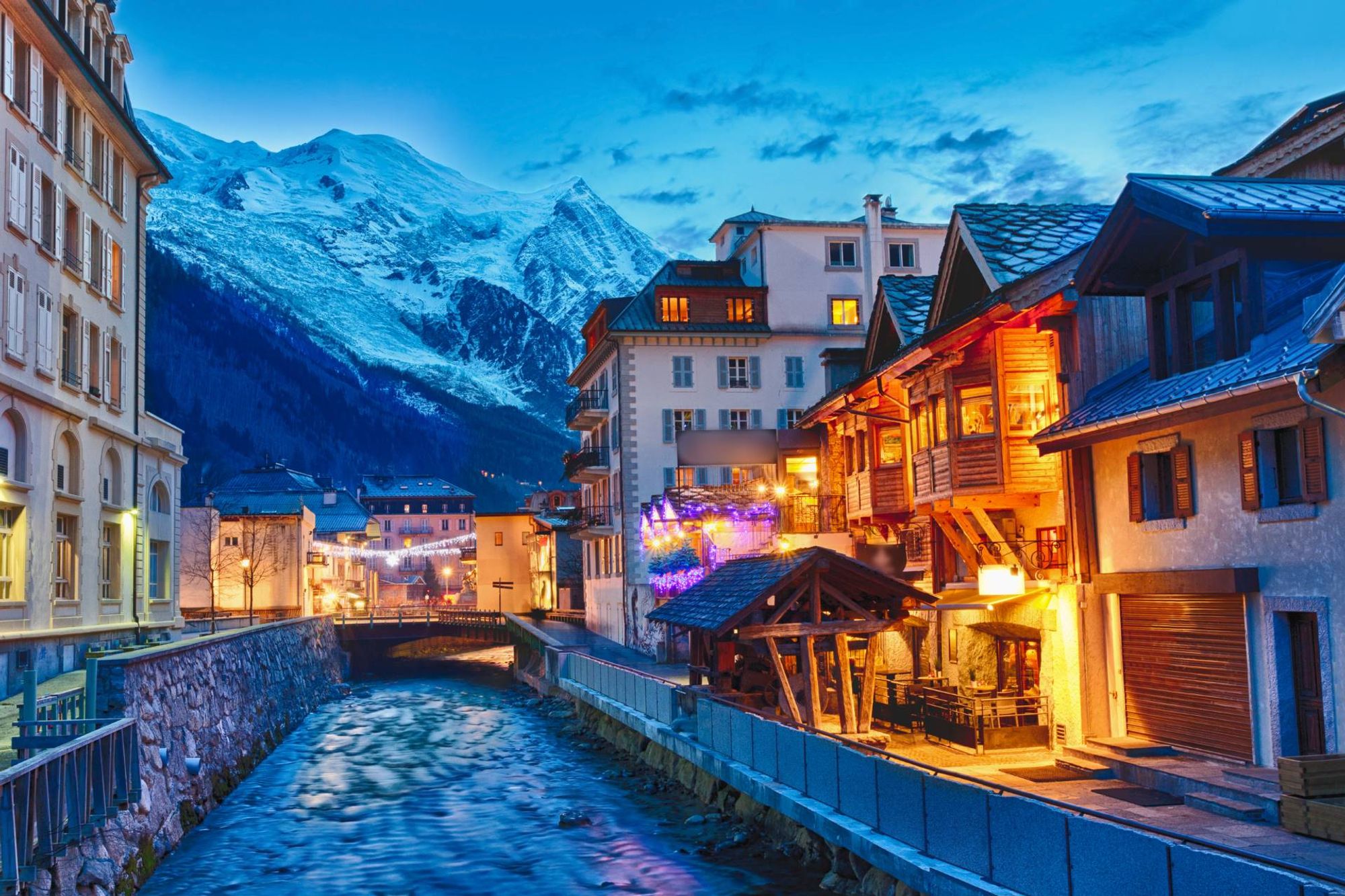
Chamonix sits in the shadow of Europe's highest peak, where mountaineers have tested themselves against vertical rock faces for centuries. Cable cars rise to Aiguille du Midi's thin air, where visitors step onto platforms with nothing but space between them and valleys far below. In town, climbers with sunburned faces share stories in cafés housed in buildings that have weathered hundreds of Alpine winters.
Snow transforms Chamonix from December through March, while summer reveals green meadows dotted with wildflowers under the same peaks.
Each morning, local cheese makers and farmers roll wooden carts into the town center to sell yesterday's work. The red train to Montenvers climbs daily through forests to the edge of a river of ice that has carved the valley over millennia. Guides who know every handhold on Mont Blanc's face gather climbers at dawn during good weather.
- How to get to Chamonix
- -Fly into Geneva Airport (Switzerland) and take a 1-hour shuttle
- -Take a train to Chamonix-Mont-Blanc station via the SNCF network
- -Drive via the A40 autoroute (White Highway)
3. Morzine
Morzine keeps its mountain village heart despite welcoming winter sports enthusiasts for generations. Families pass wooden chalets handed down through generations, smoke curls from chimneys into cold air, and restaurants serve the same potato and cheese dishes that have warmed mountain people for centuries.
Snow blankets Morzine from December until spring thaws bring mountain bikers and hikers seeking pine-scented trails. Summer days end with swims in the clear waters of Lake Montriond.
Morning light finds farmers demonstrating how milk becomes cheese using methods unchanged for generations. Market vendors arrange vegetables and meats while telling stories of where each came from. Trails lead from town into forests where guides point out chamois tracks and eagle nests that most eyes would miss.
- How to get to Morzine
- -Fly into Geneva Airport (Switzerland) and take a 75-minute transfer
- -Take a train to Cluses or Thonon-les-Bains and connect via bus
- -Drive from Calais via the French autoroute system (approximately 9 hours)
Tips for Traveling to France
VISA & ENTRY
- EU citizens: No visa needed
- Non-EU visitors: 90-day visa-free stay (US, Canada, Australia)
- Schengen visa required for others (apply 2+ months before)
CULTURAL ETIQUETTE
- Start conversations with "Bonjour" (day) or "Bonsoir" (evening)
- Learning basic French phrases helps with local interactions
- Tipping isn't required, but 5-10% is appreciated for good service
MONEY MATTERS
- France uses the Euro (€)
- Credit/debit cards are accepted in most places
- Tell your bank you're traveling to avoid card blocks
- Carry some cash for small shops and markets
HEALTH & SAFETY
- Emergency numbers: 112 (general), 15 (medical)
- No special vaccinations needed for France
- Purchase travel insurance before your trip
TRANSPORTATION
- Download the RATP app for navigating Paris' public transit
- SNCF trains provide reliable service between major cities
- Many cities offer bike-sharing programs for getting around