

Book van+ferry, car, minivan, or ferry tickets in
Italy
- Book online with local operators
- We're here for you 24/7
- Stories by travelers, for travelers


Popular routes
Naples to Sorrento
Sorrento to Naples
Naples to Positano
Bari to Matera
Pula to Venice
Naples to Capri
Rome to Sorrento
Rome to Florence
Sorrento to Positano
Venice to Porec
Naples to Amalfi
Rome to Naples
Your questions, Our answers
Are credit cards accepted in Italy?
What is the standard voltage and plug type in Italy?
Italy Travel Guide: Everything You Need to Know
Discover Italy's charm with our essential travel guide. Find out about Italy's weather patterns and the ideal times to visit for your perfect vacation. Learn the best ways to navigate through the country, whether by train, car, or public transport. Explore top cities like Rome, Florence, and Venice, along with stunning coastal regions and countryside retreats. Enjoy recommendations for authentic Italian dishes and uncover lesser-known treasures that most tourists miss.
Weather and Best Time to Visit
Northern Italy (Lombardy, Piedmont, Veneto): May-June and September-October offer pleasant temperatures and fewer crowds. July-August can be hot and crowded, while winter (December-February) is ideal for skiing in the Alps.
Central Italy (Tuscany, Umbria, Lazio): April-June and September-October provide mild weather perfect for sightseeing. July-August brings heat and tourist crowds, especially in Florence and Rome.
Southern Italy (Campania, Puglia, Calabria): May-June and September-October offer warm temperatures without excessive heat. July-August is hot but perfect for beach vacations.
Sicily and Sardinia: May-June and September-October are ideal with warm temperatures and reduced crowds. July-August is peak beach season with hot temperatures.
Italian Alps: December-March for winter sports; June-September for hiking and outdoor activities with lush green landscapes.
Traveling by Season
High Season (June to August)
Italy's high season sees heavy tourist traffic, especially in Rome, Florence, and Venice. Temperatures typically range from 24-32°C (75-90°F), with southern Italy becoming particularly hot. Rain is rare, though northern areas may experience occasional thunderstorms.
Expect accommodation costs to increase by 30-50%, and advance booking for attractions becomes essential. Prepare for crowded sites, long waiting times, and limited availability at restaurants and tours. Transportation often faces delays, especially during August when many Italians take their vacations.
Low Season (November to March, excluding Christmas/New Year)
Winter temperatures average 2-13°C (35-55°F) in northern regions and 7-16°C (45-60°F) in the south. Northern Italy often experiences fog and snow, while central and southern areas see more rainfall. Venice may encounter "acqua alta" (flooding) during this time.
Accommodation prices drop 30-40%, and attractions have noticeably fewer visitors. Be aware that many coastal businesses close, and some attractions operate on reduced schedules. Transportation runs less frequently, particularly in remote locations.
Shoulder Seasons (April-May and September-October)
These intermediate periods offer pleasant weather, with temperatures between 13-24°C (55-75°F), ideal for sightseeing activities. Spring brings some rain showers, while fall tends to be drier.
Prices run about 15-25% lower than high season, with good availability for accommodations and attractions. You can visit major sites without battling large crowds. Fall features harvest festivals and food events, while spring offers flowering landscapes. Transportation operates on regular schedules with fewer disruptions than in the summer.
How to Get to Italy
Italy's primary airports serve as key entry points for travelers visiting the country.
Rome's Leonardo da Vinci–Fiumicino Airport is Italy's busiest airport, handling international flights from around the world.
Milan has two main airports: Malpensa for international flights and Linate, which is closer to downtown for shorter routes.
Venice's Marco Polo Airport serves visitors to the canal city, while Naples Airport provides access to southern Italy. Bologna Airport connects travelers to the Emilia-Romagna region, known for its cuisine. Catania Airport serves as Sicily's main gateway, and Pisa Airport provides convenient access to Tuscany.
These airports collectively handle over 150 million passengers annually, connecting Rome, Milan, Florence, and Venice with destinations worldwide. Each airport offers a starting point for your Italian journey.
Cross-Border Travel to Italy
Several land and sea options exist for traveling to Italy without flying. Each route provides a different experience of the European landscape.
- Bus from France: The Nice to Genoa route showcases the beautiful Riviera coastline. The 7-hour journey from Lyon passes through mountain villages not visible from air travel. Be prepared with a neck pillow and downloaded entertainment, as the Wi-Fi service can be unreliable in Alpine tunnels.
- Train from Switzerland: The Bernina Express offers panoramic views of the transition from Swiss to Italian landscapes. Consider bringing your own food instead of purchasing from the expensive dining car.
- Train from Austria: The OBB Nightjet overnight train connects Vienna to Venice, passing through the Brenner Pass where Alpine peaks gradually change to Italian hills. Reserve compartments early, especially during summer when they sell out quickly.
For transportation within Italy, reliable routes include Naples to Positano, Rome to Positano, and Sorrento to Naples.
How to Get Around
Italy welcomes travelers with transportation choices that become part of the journey itself.
The country's extensive train network serves as its spine, with sleek Frecciarossa trains gliding between major cities at impressive speeds. Meanwhile, slower regional trains chug through countryside scenes of olive groves and medieval towns that can't be captured through a car window.
When trains won't do, buses carry people to hilltop villages and remote coastal spots where railway tracks never reached.
Along the Mediterranean and Adriatic shores, ferries and hydrofoils bounce across blue waters, connecting the mainland to islands like Capri with its famous blue grotto or Sicily with its ancient ruins. Some companies even offer door-to-door service with van-ferry combinations, dropping travelers directly at their island hotels.
A rental car opens up Italy's hidden corners, particularly useful for exploring the winding roads of Tuscany or the Alps. Just note that historic centers often have restricted traffic zones (ZTL) where only authorized vehicles may enter. An unexpected ticket isn't the souvenir most want to bring home.
City exploration comes easy with underground metro systems rumbling beneath Rome, Milan, and Naples, while buses and trams create surface networks reaching every neighborhood. In Venice, water taxis glide along canals between centuries-old buildings, turning simple transportation into memory-making moments.
For help arranging transportation across Italy, our partners Enjoy Travelling and DTS Travel Group can handle the details.
Food Scene
Italian food tells a different story in every town and village. In Naples, the pizza makers stretch dough by hand, just as their great-grandparents did. Romans twirl perfect strands of carbonara around their forks, egg yolk coating each bite. In Florence, butchers slice T-bone steaks three fingers thick for bistecca alla fiorentina.
Regional Highlights:
- Lombardy: Saffron turns risotto golden in Milan.
- Sicily: Rice balls hide surprises inside, while cannoli crack between your teeth.
- Bologna: Tagliatelle ribbons catch every bit of slow-cooked ragù.
- Liguria: Basil gets crushed with pine nuts for bright green pesto.
Wander Palermo's Ballarò Market for chickpea fritters or nibble cicchetti while standing at Venice's Rialto counters.
Try Puglia's ear-shaped pasta, watch Parmigiano-Reggiano makers crack open wheels in Emilia-Romagna, and cool off with grainy Sicilian ice. Each meal connects you to the people who've perfected these recipes over generations.
Hidden Gems
1. Alberobello
White limestone houses with pointed stone roofs rise from the streets of Alberobello like something from an old tale. These 14th-century dwellings, passed down through generations, stand together in the neighborhoods of Rione Monti and Aia Piccola. Morning light catches on their curved walls before tourists arrive. The streets grow quiet again in May and September when summer crowds thin out.
Travelers can take the train from Bari, watching olive groves pass by during the hour-long journey, or drive between the smaller towns of Puglia that sit beyond the main roads.
2. Matera
Homes were carved directly into rock in the neighborhoods of Matera. Families lived in these caves for centuries before the government relocated them in the 1950s. Now people have returned, opening small shops and restaurants in spaces where their grandparents kept animals. When evening comes, lights begin to appear in windows cut into the stone. The temperature drops pleasantly in spring and fall, making it easier to climb the worn steps between levels of the city.
The train from Bari takes about 90 minutes, followed by a local bus that winds up to where the modern town meets its ancient predecessor.
3. Procida
Fishermen still mend nets along the harbor of Procida, where houses painted in lemon yellow, sky blue, and dusty pink line the waterfront. The island keeps its daily rhythms even as visitors wander its narrow streets. From the Terra Murata Fortress, the Bay of Naples stretches out below, with Mount Vesuvius on the horizon. In June and September, locals reclaim their coffee shops and piazzas as summer visitors depart.
The ferry crossing from Naples takes just 40 minutes, and the boat cuts through blue water until the colorful island appears ahead.
Scenic Routes
Italy's roadways reveal the country's character through landscapes that change with each mile. These journeys connect travelers to history, culture, and natural beauty that appears outside the window frame by frame.
Florence to Rome: The road cuts through Tuscany, where hills roll endlessly and cypress trees stand tall against the horizon. In April, red poppies and yellow sunflowers dot the farmland between these Renaissance capitals. Trains pass medieval towns built on hilltops, their stone walls glowing amber at sunset, while vineyards stretch into the distance.
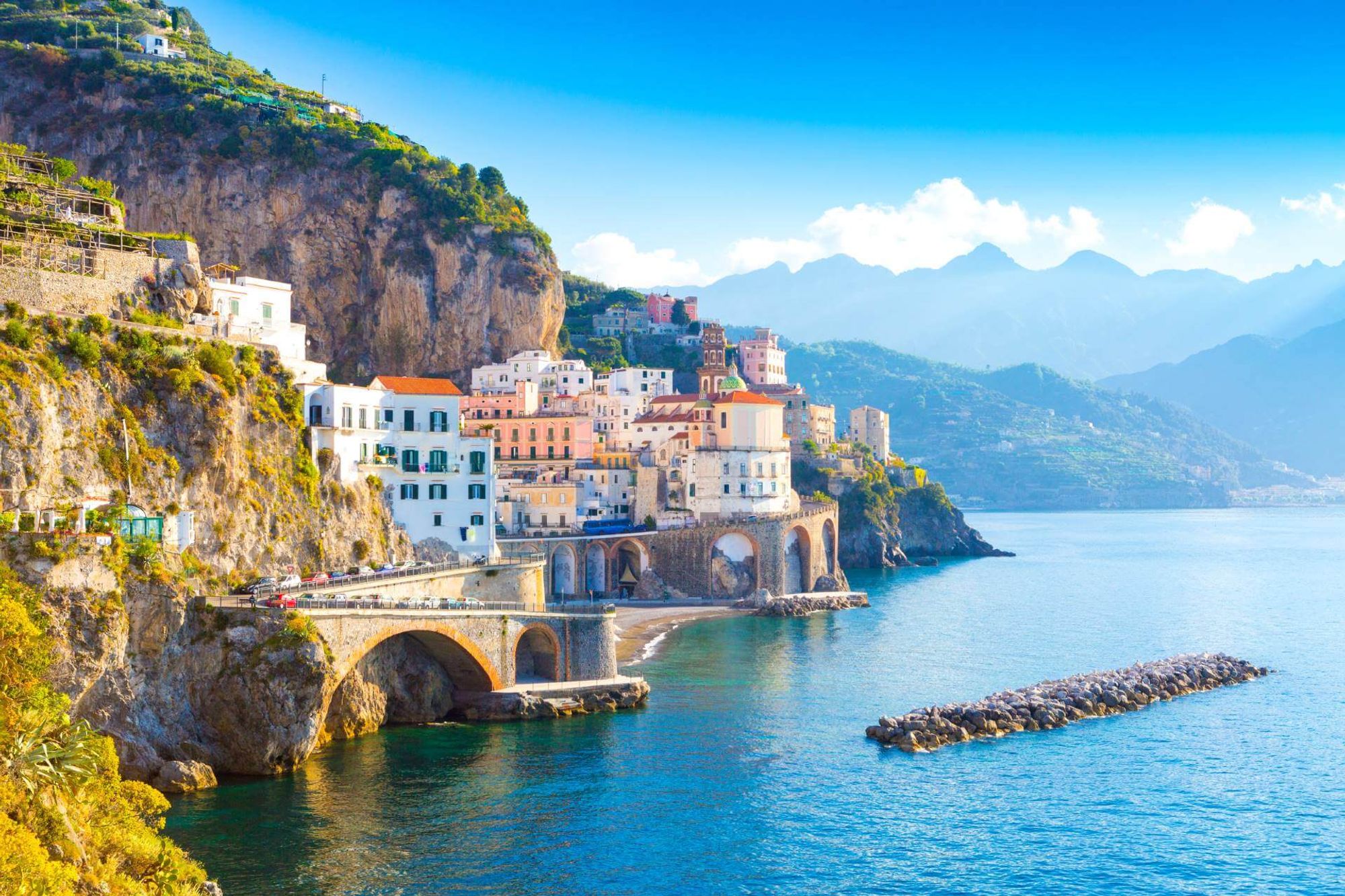
Sorrento to Amalfi: The road clings to coastal cliffs with the blue Mediterranean hundreds of feet below. Around each bend, another village appears–houses in peach, pink, and yellow are stacked up the mountainside. Take this route in May or October when seaside cafes still serve fresh lemon granita, but without the July crowds. Bus drivers navigate hairpin turns that sailors once used as landmarks from the sea.
Milan to Lake Como: The journey begins among skyscrapers and fashion houses before mountains rise suddenly from the water's edge. The train follows the shore where boats dock at centuries-old villas with gardens that step down to the waterline. In summer, locals swim from wooden piers while alpine peaks, sometimes still snow-capped, form the backdrop.
Venice to Trieste: The route leaves the canal city behind and follows the Adriatic coast to a town where Italian, Austrian, and Slavic cultures blend on every street. October brings clear skies when the train tracks run so close to the shore that it feels like traveling on the water itself. Fishermen repair nets in harbors that have welcomed ships for a thousand years.
Genoa to Cinque Terre: The railway tunnels through the Ligurian mountains before emerging where five villages cling to steep cliffs above small harbors. Come in September when hiking paths between towns offer sweeping sea views without summer heat. Trains emerge from dark tunnels into sudden light and color–red, orange, and yellow houses against deep blue water.
Events, Festivals and Local Markets
During February in Venice, locals and visitors don handcrafted masks and period costumes for Carnevale di Venezia. People walk through narrow canals and small squares, their identities hidden behind intricate facades. The tradition dates back centuries, a time when social roles disappeared under the anonymity of a mask.
Twice a year, on July 2 and August 16, the medieval city of Siena holds its breath during the Palio di Siena. Ten horses and riders represent different city districts, racing around the shell-shaped Piazza del Campo. The 90-second race carries centuries of neighborhood rivalries, with spectators packed shoulder-to-shoulder in the square's center.
When winter grips the Alps in January, Aosta comes alive with the thousand-year-old Fiera di Sant'Orso craft fair. More than 1,000 craftspeople line the streets, their hands telling stories through wood carvings, wrought iron, and textiles. The smell of pine shavings mixes with mulled wine as visitors watch artisans at work.
Every third weekend of May, the streets of Noto transform into art. During Infiorata di Noto, local artists arrange flower petals, seeds, and soil into detailed patterns on the pavement. Visitors walk alongside these temporary masterpieces, roses form faces, sunflower petals become sun rays, and colored rice creates intricate borders.
Best Places to Visit
There is more to Italy than Rome, Florence, and Venice. These three destinations are well worth the journey.
1. Naples
Naples tells stories through its narrow streets. The capital of Campania brings Italy's past and present together in one place, where locals perfect pizza-making techniques passed down through generations. Nearby, Mount Vesuvius stands as a reminder of the forces that shaped this land.
Walking through the historic center, visitors find themselves surrounded by layers of history—Roman ruins beneath medieval buildings beneath Renaissance art. The National Archaeological Museum holds treasures that speak of life before Vesuvius erupted in 79 AD.
April through June or September through October offer comfortable weather and space to breathe without summer's crowds and heat.
Teatro di San Carlo hosts opera performances that echo through its historic halls throughout the year.
Beneath the city, daily tours reveal the ancient Greek-Roman aqueduct system, an underground world few travelers know exists.
- -Direct flights to Naples International Airport from major European cities
- -High-speed trains from Rome (1 hour) and other Italian cities
- -Cruise ships dock at Naples port, within walking distance of the city center
2. Positano
Houses in shades of pink, yellow, and terracotta cling to steep cliffs above the Mediterranean in Positano. From the pebble beach, looking up reveals the town's vertical nature with the dome of Santa Maria Assunta Church distinguishing itself with colorful majolica tiles.
Shopkeepers in small boutiques sell handmade sandals and linen clothing while restaurant kitchens prepare fresh seafood caught that morning.
Between May and September, the sea warms enough for swimming. June and September offer warm days without the July-August crowds.
Boats depart daily in summer for Capri and Ischia, giving different perspectives of the coastline. As evening falls, classical music notes float through the air at concerts held against backdrops of sea and sky.
- How to get to Positano
- -Ferry services from Naples, Sorrento, and other Amalfi Coast towns
- -SITA buses connect Positano to nearby towns along the coastal road
- -Private transfers or taxis from Naples airport (90 minutes)
3. Sorrento
Lemon trees grow throughout Sorrento, their fruit finding its way into everything from pastries to the local limoncello. The town sits on cliffs above the Bay of Naples, providing views that stretch to Mount Vesuvius on clear days.
In the historic center, people gather in piazzas to sip coffee or aperitifs, watching the world pass by. The town serves as a convenient starting point for day trips while offering its own reasons to stay.
From April to October, Sorrento welcomes visitors with open arms, though May-June and September-October offer perfect temperatures and breathing room.
Several nights each week during tourist season, dancers perform the traditional tarantella, feet moving quickly to ancient rhythms. Local artisans and farmers bring their goods to weekly markets in the main square.
- -Circumvesuviana train connects Sorrento to Naples (1 hour journey)
- -Ferries and hydrofoils from Naples and Capri operate regularly
- -Airport shuttles and private transfers from Naples International Airport
Tips for Traveling in Italy
VISA & ENTRY
- EU citizens: No visa needed
- Non-EU visitors: 90-day Schengen visa-free for many countries (US, Canada, Australia)
- Apply online at the consulate if required; processing takes 2-3 weeks
CULTURAL ETIQUETTE
- Greet with handshakes, cheek kisses among friends
- Dress modestly for churches (covered shoulders/knees)
- 10-15% tip in restaurants if service charge not included
MONEY MATTERS
- Currency: Euro (€)
- Cards are widely accepted, and carry some cash for small establishments
- Notify the bank before travel
HEALTH & SAFETY
- Emergency: 112
- Travel insurance mandatory
- Routine vaccines recommended
- Pickpocketing is common in tourist areas
TRANSPORTATION
- The train network is extensive and efficient
- City buses/metros are affordable
- ZTL zones restrict driving in historic centers