

Book minivan, bus, flight, or car tickets in
Turkey
- Book online with local operators
- We're here for you 24/7
- Stories by travelers, for travelers


Popular routes
Antalya to Alanya
Alanya to Antalya
Istanbul to Antalya
Antalya to Side
Antalya to Goreme
Side to Antalya
Antalya to Kemer
Istanbul to Burgas
Dalaman to Fethiye
Izmir to Kusadasi
Antalya to Konakli
Batumi to Istanbul
Your questions, Our answers
Which holidays are celebrated in Turkey?
These are the holidays celebrated in Turkey:
- Commemoration of Atatürk, Youth and Sports Day
- Democracy and National Unity Day
- Eid al-Adha
- Eid al-Fitr
- Labor Day
- National Sovereignty and Children's Day
- New Year's
- Republic Day of Turkey
- Victory Day
Turkey Travel Guide: Everything You Need to Know
Discover the wonders of Turkey with our comprehensive travel guide. Learn about the weather patterns and find the best time to plan your visit. Get tips on transportation options to easily move around the country. Explore our recommendations for top cities, famous destinations, and delicious local dishes to try. Uncover hidden gems that most tourists miss and make your Turkey adventure truly unforgettable.
Weather and Best Time to Visit
The Aegean Coast is best visited from May to October when you'll find warm temperatures and minimal rainfall. July and August are the hottest months with temperatures above 30°C/86°F, while May, June, September and October provide milder conditions with fewer crowds.
For the Mediterranean Coast, the ideal time is from April to November, with perfect beach weather from June to September. Spring (April-May) and fall (October-November) offer pleasant temperatures for exploring ancient ruins.
In Central Anatolia (Cappadocia), aim for April to June and September to October when temperatures are comfortable for hiking and balloon rides. Summer (July-August) can be very hot, while winter offers snow-covered landscapes.
Istanbul and Marmara are best experienced from April to June and September to October with mild temperatures and fewer tourists. Summer can be humid, while winters are cool and occasionally snowy.
The Black Sea Coast is most enjoyable from June to September during the driest period, with lush green landscapes. This region is generally cooler and more humid than other parts of Turkey.
Traveling by Season
The High Season: June through August
Turkey's peak tourist season brings crowds to coastal resorts and major cities. Temperatures range from 30-40°C (86-104°F), with minimal rainfall and clear skies.
The Mediterranean and Aegean coasts have ideal beach weather, while Istanbul and Cappadocia can become uncomfortably hot. Prices increase by 30-50% for accommodations, flights, and tours. Book well in advance as availability becomes limited, especially in Antalya and Bodrum. Expect crowded attractions with long lines. Heat can occasionally cause transportation delays.
The Low Season: November to March
Winter sees few tourists in Turkey. Most coastal resorts close, though major cities remain open. Prices drop 40-60% for all services. Istanbul and inland areas get cold (0-10°C/32-50°F), with possible snow in eastern regions and Cappadocia. The Mediterranean coast stays milder (10-15°C/50-59°F). Rainfall increases, particularly in December and January. Winter storms may disrupt flights and ferries.
Benefits include:
- -Uncrowded attractions
- -More authentic experiences
Shoulder Seasons: April-May & September-October
Shoulder seasons (April-May & September-October) offer the best overall value. Temperatures are comfortable at 15-25°C (59-77°F) with moderate rainfall.
Spring features blooming landscapes, while autumn has harvest festivals. Prices are 15-30% lower than peak season, with good availability at most destinations. The weather is typically stable, though spring may have occasional showers. All attractions are open but not overcrowded. These months are ideal for comfortably exploring both coastal areas and cultural sites.
How to Get to Turkey
Across Turkey, airports connect travelers to the country's diverse regions. Istanbul Airport now serves as the primary international hub, replacing Atatürk Airport and offering flights to over 300 destinations worldwide. Sabiha Gökçen Airport provides an alternative entry point on Istanbul's Asian side.
For Mediterranean destinations, Antalya Airport offers convenient access with scenic sea views during landing. Ankara Esenboga Airport serves government officials and visitors to Turkey's capital city, Ankara.
Travelers to Turkey's western coast typically arrive at Izmir Adnan Menderes Airport, which provides easy access to Izmir and its coastal areas. Those heading to beach destinations can fly into Dalaman Airport to reach Muğla province, while Milas-Bodrum Airport serves visitors going directly to the Bodrum Peninsula.
In the north, Trabzon Airport sits between the mountains and the Black Sea, serving as the main entry point to Trabzon and surrounding Black Sea regions.
Many travelers enter Turkey through one airport and depart from another, allowing them to experience multiple regions during their visit.
Cross-Border Travel to Turkey
There are several ways to enter Turkey by land and sea, which can provide a more interesting travel experience than flying.
- Bus from Bulgaria: The Sofia to Istanbul route costs approximately €25 and offers comfortable seating with adequate legroom. Buses typically depart Sofia at 4 pm and cross at the Kapitan Andreevo/Kapıkule border post, where drivers collect passengers' passports for processing. Bring food for the journey, though there's usually a midnight stop at a roadside café serving börek. You'll arrive in Istanbul the following morning. All Bulgaria routes.
- Ferry from Greece: The Rhodes to Marmaris crossing takes about 90 minutes and offers a striking contrast between Greek and Turkish culture. During summer, advance booking is recommended as ferries become crowded. The Lesvos to Ayvalık route is less touristy and showcases authentic fishing communities on both sides. More Greece routes.
- Ferry from Cyprus: The Limassol to Taşucu route crosses the Mediterranean, but be aware that winter schedules can be unreliable. Border procedures sometimes take longer than the actual journey, so bring something to read. More Cyprus routes.
Popular Routes Within Turkey:
How to Get Around
As travelers move across Turkey's landscapes, they discover a country connected by various transportation networks.
Intercity buses (otobüs) serve as the backbone of long-distance travel, where passengers often receive small refreshments while watching the countryside roll by. When time matters, domestic flights leap between Istanbul's sprawling metropolis to Ankara's hillside capital or the sun-washed coastal towns in just over an hour.
Between smaller towns, minivans called dolmuş depart when full rather than on fixed schedules, creating a rhythm all their own. Locals squeeze in shoulder-to-shoulder, passing money forward to the driver in a practiced routine that travelers soon adopt.
Along the coasts, ferries cut across the waters, connecting Istanbul's European streets to its Asian neighborhoods. These water routes also link coastal communities along the Mediterranean and Aegean, where passengers often spot dolphins playing in the distance.
In larger cities like Istanbul, Ankara, and Izmir, metro trains hum beneath the streets while above, trams wind through historical quarters, their bells announcing their approach. Taxis wait at corners throughout Turkish cities, though a quick conversation about the fare helps avoid surprises at journey's end.
For those seeking ease after long flights or help reaching out-of-the-way places, services like ECE Transfer or 724 Marmaris Transfer connect travelers directly with local drivers who know the shortcuts and stories behind the places they pass.
Food Scene
The kitchens of Turkey tell stories that span centuries and continents.
When walking Istanbul's winding streets, the scent of slowly rotating meat leads to döner kebabs. Nearby, generations of bakers at Çengelköy Börekçisi fold thin dough into börek, creating flaky parcels filled with cheese or minced meat that crack perfectly between your teeth.
Istanbul's Grand Bazaar and Spice Bazaar hum with activity as shopkeepers call out offers while locals debate the merits of different olive varieties. The streets of Istanbul's Ortaköy district come alive at night as vendors split open steaming potatoes to create kumpir, adding whatever toppings catch your eye.
In Izmir, the narrow alleys of Kemeraltı Market hide family cheese producers who offer tastes of their morning's work.
Different regions guard their culinary treasures:
- -Boat-shaped pide breads emerge from Black Sea ovens.
- -Tiny handmade mantı dumplings are pinched together in Kayseri kitchens.
- -The grills of southeastern Turkey produce Adana kebab with a heat that lingers pleasantly.
Hidden Gems
1. Ani
A thousand years ago, Ani was a thriving medieval city. Today, its ruins stand quietly on the Turkish-Armenian border, telling stories of a forgotten era. The churches still show intricate stone carvings, and the massive city walls remind visitors of Ani's former importance. The sun casts long shadows across these ancient Armenian structures in the late afternoon, making history feel close enough to touch. Between May and September, the weather stays mild and skies remain clear. To get there, take a taxi from Kars, about 42 km/26 miles away, or join one of the day tours that regularly visit the site.
2. Amasya
The Yeşilırmak River cuts through Amasya, creating a natural mirror for the Ottoman houses that seem to grow directly from the rocky cliffs. Above them, an old citadel watches over the town as it has for centuries. In spring, especially from April to June, fruit trees bloom in small gardens, adding splashes of color to the landscape. The evening light turns the water and buildings golden, making even a simple walk memorable. Buses connect Amasya to major cities across Turkey, and trains arrive regularly from Ankara and Sivas.
3. Uzungöl
In a valley where mountains hold up the sky, Uzungöl's lake reflects wooden houses and a small mosque with a slender minaret. The air feels different here. Cleaner, cooler, scented with pine. Morning fog often hangs over the water before lifting to reveal forests climbing up mountainsides. Summer brings families out on the lake, while autumn paints the surrounding trees in red and gold. Minibuses make the 99 km/61 mile journey from Trabzon in about 1.5 hours, winding through increasingly beautiful scenery as they climb.
Scenic Routes
Turkey's geography tells stories through its roads — coastlines speak of ancient sailors, mountains whisper tales of civilizations, and unusual rock formations reveal nature's patient handiwork. These five routes let travelers see these stories unfold through a bus window:
Istanbul to Cappadocia: The journey begins in old Constantinople, where seagulls circle minarets and fish sandwich vendors call out to passersby. The landscape gradually transforms until strange rock cones appear on the horizon - homes carved into stone by people centuries ago. Come in April or October when the weather cooperates. Taking the night bus means waking up to this new world.
Antalya to Kas: This road clings to cliffs while the Mediterranean stretches endlessly blue below. Fishing boats dot the water, and occasional sea turtles can be spotted from above. Early June offers warm days without crowds. Travelers who choose right-side seats get the full effect of the drop to the sea.
Fethiye to Oludeniz: Pine-covered mountains give way to a bay where fresh water meets salt at the Blue Lagoon. Local buses stop at overlooks where paragliders launch into the sky. Mid-May brings wildflowers along the roadside. Window seats become small moving observation decks.
Trabzon to Rize: The Black Sea coast reveals itself through fog-touched hills covered in rows of tea plants. Women with colorful headscarves pick leaves while ancient stone bridges cross mountain streams. July and August bring clear skies to this normally rainy region.
Göreme to Uçhisar: The heart of Cappadocia unfolds between these towns, with rock formations shaped like animals and towers. Early risers in summer see hot air balloons floating over valleys while the rising sun turns everything gold. The small minibuses stop often — cameras ready.
Events, Festivals and Local Markets
The Grand Bazaar (Kapalı Çarşı) in Istanbul tells stories through its labyrinthine corridors that date back centuries. Over 4,000 shopkeepers welcome visitors every day of the year, offering handcrafted jewelry, textiles woven by generations of artisans, and treasures waiting to be discovered. Walking these paths connects you to trading traditions unchanged since Ottoman times.
Morning light filters through colored glass windows at the Spice Bazaar (Mısır Çarşısı) in Istanbul, where the air carries scents of cinnamon, saffron, and freshly made Turkish delight. Since the 1660s, this market has been where locals and travelers meet daily. Shopkeepers offer samples and tell tales of where each spice originated.
Artists transform Istanbul during the Istanbul Biennial, held in odd-numbered years from September to November. Historical hamams, abandoned factories, and unexpected public spaces become canvases for thought-provoking art installations. Conversations between artists and visitors flow naturally as the city itself becomes part of the exhibition.
Film lovers gather each April for the Istanbul International Film Festival in Istanbul. Neighborhood theaters fill with audiences experiencing some 200 films from directors worldwide. After screenings, nearby cafés buzz with discussions about stories just shared, and filmmakers often join to add their perspectives.
Best Places to Visit
1. Antalya
Along Turkey's southwestern coast sits Antalya, where the Mediterranean Sea meets ancient history. In the Old Town (Kaleiçi), narrow streets wind between Ottoman-era houses with wooden balconies. Children lick ice cream cones while their parents sip Turkish tea at small cafés tucked between stone walls that have stood for centuries.
When April arrives, so do comfortable temperatures around 21°C/70°F, perfect for exploring without summer's heat or crowds. The sea warms enough for swimming by May, while October offers golden afternoons when locals return to reclaim their city.
At the 2,000-year-old Aspendos Theater, opera notes soar into the night sky during the annual Opera and Ballet Festival. The ancient stones, polished by countless footsteps, provide surprisingly excellent acoustics. Runners from across the world challenge themselves on the coastal Antalya Marathon route, where sea breezes cool their efforts.
- How to get to Antalya
- By Air: Direct international flights to Antalya Airport from major European cities
- By Sea: Mediterranean cruise ships dock at Antalya's modern port
- By Road: Well-connected highway system from Istanbul (approximately 8-hour drive)
2. Alanya
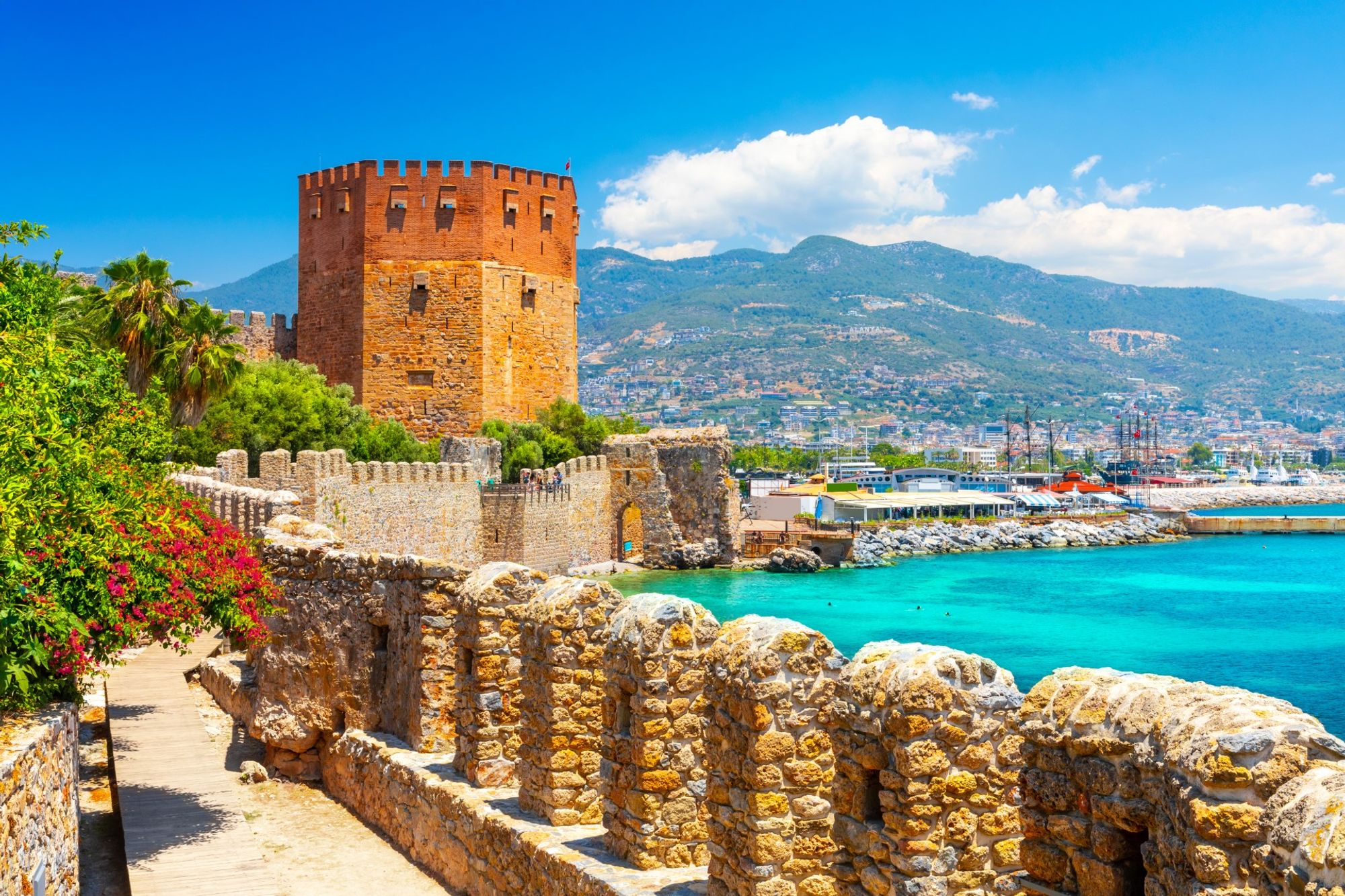
Red castle walls climb the rocky peninsula above Alanya, telling stories from the 13th century. Below, the Mediterranean stretches blue in both directions along the coast. Families spread towels on Cleopatra Beach while the Taurus Mountains create a dramatic backdrop to the north.
Between May and October, the sea temperature feels like bathwater. July afternoons reach 32°C/90°F, when even locals retreat to shade or water. In September, the crowds thin while the sea retains summer's warmth, a secret the experienced travelers keep to themselves.
Each evening as the sun sets, the Harbor Night Market awakens. Fishermen sell their day's catch while artisans display handmade jewelry and textiles. On wooden boats bobbing in the harbor, captains invite passengers for journeys to nearby caves where sunlight filters through turquoise water. When night falls completely, traditional music flows from restaurants where dancers in colorful costumes tell Turkey's stories through movement.
- By Air: Fly to Antalya or Gazipaşa airports (Gazipaşa is closer at just 40km away)
- By Bus: Regular coach services connect from major Turkish cities
- By Private Transfer: Convenient door-to-door service from regional airports
3. Dalaman
Travelers often pass through Dalaman quickly, eager to reach better-known destinations. Those who pause discover a place where mountains covered in pine trees meet rivers that wind toward the sea. Unlike its famous neighbors, Dalaman offers quiet beaches where you might be the only footprints in the sand and hot springs where locals have soaked away their troubles for generations.
Late April brings wildflowers and temperatures perfect for hiking. By July, the thermometer climbs past 32°C/90°F, and families crowd the coastline. September feels like summer without the rush, warm enough to swim, cool enough to explore.
On the Dalaman River, rafts bounce through rapids while passengers laugh and splash. In town, the weekly market buzzes with farmers selling tomatoes still warm from the sun and olives cured in family recipes passed through generations. Under the forest canopy, hikers follow guides who point out plants used in traditional medicine and tell tales of the ancient Lycian people who once called these mountains home.
- By Air: International flights to Dalaman Airport from across Europe
- By Bus: Connected to major Turkish cities via intercity coach services
- By Car: Scenic coastal drive from nearby resort towns like Marmaris and Fethiye
Tips for Traveling to Turkey
VISA & ENTRY
- Most visitors need an e-Visa ($60 USD)
- Valid passport with 6+ months validity required
- Some EU citizens can enter visa-free for 90 days
CULTURAL ETIQUETTE
- Modest dress at religious sites
- Remove shoes when entering homes
- Handshakes are common, expect hospitality
MONEY MATTERS
- Turkish Lira (₺) — keep small bills handy
- Credit cards are widely accepted in cities
- Notify the bank of travel plans
HEALTH & SAFETY
- Emergency: 112
- Travel insurance essential
- Routine vaccines recommended
- Drink bottled water
TRANSPORTATION
- Extensive public transit in cities
- Istanbul Card for multiple transports
- Domestic flights are affordable between major cities