

Book bus, train, flight, or ferry tickets in
Lithuania
- Book online with local operators
- We're here for you 24/7
- Stories by travelers, for travelers


Popular routes
Vilnius to Vilnius
Vilnius to Gdansk
Tallinn to Kaunas
Riga to Vilnius
Vilnius to Riga
Riga to Siauliai
Kaunas to Suwalki
Warsaw to Kaunas
Siauliai to Riga
Vilnius to Kaunas
Kaunas to Warsaw
Vilnius to Telsiai
Lithuania Travel Guide: Everything You Need to Know
Discover the enchanting Baltic gem with our concise Lithuania travel guide. Learn about the weather patterns, the optimal seasons for your visit, and convenient ways to navigate the country. Explore Lithuania's vibrant cities and must-see attractions that capture the nation's rich heritage. Tantalize your taste buds with traditional Lithuanian cuisine recommendations for an authentic culinary experience. Uncover hidden treasures and off-the-beaten-path locations that even locals cherish.
Weather and Best Time to Visit
The Coastal Region (Klaipėda, Palanga, Neringa): June to August has warm temperatures (20-25°C/68-77°F) ideal for swimming in the Baltic Sea and enjoying the Curonian Spit beaches. Early September still has good weather with fewer tourists.
Vilnius & Southern Lithuania: May to September provides the best conditions for sightseeing with temperatures between 18-25°C/64-77°F. June has the longest daylight hours, while September shows beautiful autumn colors in the city parks.
Central Lithuania (Kaunas, Trakai): Late April to June features flowering landscapes and mild temperatures (15-22°C/59-71°F). September offers impressive autumn foliage around Trakai's lake castle.
Eastern Highlands (Aukštaitija): July and August are the warmest (20-24°C/68-75°F) for exploring the region's lakes and forests. May has abundant wildflowers, while October displays vibrant fall colors.
Žemaitija (Lowlands): May to early October has favorable weather for visiting the national park and cultural sites with moderate temperatures.
Traveling by Season
The High Season: June-August
Summer is Lithuania's busiest travel period, with temperatures typically between 20-25°C (68-77°F). July is the peak month, featuring long daylight hours and crowded beaches at Palanga and the Curonian Spit.
Accommodation prices increase by 30-50%, and popular destinations require advance booking.
Afternoon thunderstorms occasionally occur. Major events like the Vilnius Festival and Song Festivals bring additional visitors. While generally pleasant, humidity can sometimes make city exploration uncomfortable.
The Low Season: November-March
Winter attracts few tourists except during the Christmas market season. Temperatures typically range from -5°C to +5°C (23-41°F), sometimes dropping below -15°C (5°F) in January. Daylight is short (7-8 hours), and snow is common, sometimes affecting transportation. Pack for icy conditions and possible freezing rain.
Many indoor attractions reduce their hours, and some rural accommodations close completely.
Benefits include:
- -40-60% lower prices
- -Better availability for accommodations
- -Winter activities like cross-country skiing
The Shoulder Season: April-May & September-October
Spring brings flowering landscapes and gradually warming temperatures (8-18°C/46-64°F), though April can be rainy. Fall features colorful foliage with similar temperatures, cooling by late October.
These periods offer a good balance: fewer crowds (except during Easter and early September), prices 15-30% lower than summer, and comfortable sightseeing weather. Most attractions operate normally with minimal waits. Morning fog in autumn may delay transportation, while spring thaws can cause minor flooding in low-lying areas.
How to Get to Lithuania
Three international airports connect Lithuania to the rest of Europe, each serving different regions of this Baltic country. Vilnius International Airport (VNO) handles the most traffic, with over 5 million passengers annually. From Vilnius, you can catch flights to major European cities including London, Berlin, and Warsaw.
Kaunas Airport (KUN) serves central Lithuania. Budget carriers like Ryanair and Wizz Air operate regular flights to Kaunas, offering economical options for reaching Lithuania's second-largest city with its medieval castle.
Palanga International Airport (PLQ) provides access to Lithuania's Baltic coast. Located minutes from the shoreline, this smaller airport connects Palanga and the western region to several European destinations, with increased service during summer months.
These three airports make Lithuania easily accessible, providing convenient entry points for exploring the country's diverse attractions.
Cross-Border Travel to Lithuania
Lithuania is accessible through several transportation options from neighboring countries, despite its northeastern European location. Here are the most reliable routes:
- Bus from Latvia: Lux Express and Ecolines operate frequent services between Riga and Vilnius (4 hours), with departures nearly every hour. These buses provide reliable Wi-Fi and comfortable seating. Main connections include Riga to Klaipeda for coastal access, Riga to Siauliai near the Hill of Crosses, and Riga to Pasvalys for northern Lithuania. Additional Latvia routes.
- Train from Poland: The Warsaw-Vilnius overnight train offers a convenient option with sleeping accommodations. The dining options are limited, so consider bringing your own food. See other Poland routes.
- Bus from Belarus: The Minsk to Vilnius service takes approximately 4 hours. Allow extra time for border controls, which can extend your journey by an hour. Buses are typically well-heated but may have inconsistent air conditioning during summer months.
- Ferry from Russia: A ferry connects Kaliningrad to Klaipeda, with a journey time of about 6 hours. Consult the current schedules, particularly during winter when services may be reduced.
How to Get Around
Lithuania's transportation system helps travelers see every corner of this Baltic country with ease.
Trains run by Lithuanian Railways (LG) connect the bigger cities, though they don't reach everywhere. Buses truly serve as the country's transportation workhorse, reaching almost every town with regular schedules and fair prices that won't empty your wallet.
In cities, the network of public buses and trolleybuses gets people where they need to go without much hassle. Need something quicker? Taxis wait at city corners, while many locals now tap their phones to call a Bolt car instead.
The mostly flat landscape makes Lithuania perfect for cycling, and cities like Vilnius and Klaipėda have created paths that keep riders safe from traffic. Buses remain the hero of Lithuanian travel, though — they're cheap, go everywhere from city centers to tiny villages, and let you sit beside locals going about their day.
For trips between cities, check out Lux Express or Toks, whose drivers know the roads well and depart right on time.
Food Scene
Lithuanian kitchens tell stories through food that's been passed down for generations.
The country's dishes speak of cold winters, fertile fields, and forest harvests. When in Vilnius, try cepelinai — potato dumplings filled with meat — that arrive at tables like zeppelins, explaining their nickname.
During summer, cool down with a bowl of šaltibarščiai, a pink cold beet soup served with a side of hot potatoes, creating a temperature contrast that locals have enjoyed for centuries.
Food markets hold the real treasures of Lithuanian eating. Walking through Hales Market in Vilnius, shopkeepers offer samples of homemade cheese and slices of smoked meats. Weekend mornings at Tymo Market bring families together around steaming food stalls.
In Kaunas, locals eat breakfast standing at Urmas Food Market, where old recipes come alive in simple paper wrappings.
Each region keeps its own food secrets. In Žemaitija, grandmothers still make kastinys, spreading this sour cream butter on dark bread. Dzūkija's forests provide mushrooms for grybų sriuba, a soup that tastes like autumn in a bowl.
Hidden Gems
1. Pažaislis Monastery
On a peninsula jutting into Kaunas Reservoir stands a white Baroque complex where time seems to slow down.
Monks once walked these halls adorned with frescoes that tell stories of faith and history. Today, footsteps echo through the courtyard where visitors are few, allowing the monastery's details to be absorbed without hurry. In July, the stone walls resonate with string quartets and orchestras during the Pažaislis Music Festival.
Catch bus #38 from Kaunas or pedal along the water for 30 minutes; the journey itself becomes part of the experience.
2. Karaim Kenesa
In Žvėrynas district, a wooden building with unusual lines tells the story of Lithuania's smallest ethnic community.
Step inside to see how Middle Eastern prayer traditions adapted to Northern European winters. On spring weekends, you might meet community members whose ancestors arrived in Lithuania over 600 years ago, speaking a language related to Turkish.
Trolleybuses #12 and #17 stop nearby, connecting this cultural island to downtown Vilnius.
3. Verkiai Palace
Just a 15-minute ride from the city center, old-growth forests surround a white neoclassical palace in Verkiai Regional Park.
Walking paths lead to lakes where water reflects clouds and trees. Come in autumn when red and gold leaves carpet the ground and the air smells like earth and rain. The contrast between city life and forest quiet becomes most apparent then.
Buses #35 and #36 from Vilnius deliver you to trails that feel much farther from the city than they actually are.
Scenic Routes
Lithuania tells its story through winding roads that connect ancient history with natural wonders.
As seasons change, each journey reveals different chapters of this Baltic nation:
Vilnius to Trakai: A red-brick castle sits on an island, surrounded by clear lakes. Summer visitors watch sunlight play on castle walls, then cool off with a swim. The bus window frames forests and lakes as you travel, like pages from a picture book.
Klaipeda to Nida: The ferry crosses water to a narrow strip of land where sand has piled into mountains over centuries. Pine trees grip the sand, holding the land in place. Go in May or September to walk these dunes with fewer footprints beside yours.
Siauliai to Hill of Crosses: Morning mist reveals thousands of crosses, large and small, placed by generations of people. The bus ride there shows you farmhouses and fields that haven't changed in decades.
Druskininkai to Grutas Park: From a town known for healing waters, the path leads to stone faces from a vanished era. Soviet statues stand in forest clearings, creating an open-air history lesson. Summer visitors can pair this trip with forest walks or lake swimming.
Ignalina to Ladakalnis: The bus stops at the edge of wilderness, where a path climbs to a hill considered sacred for centuries. From the top, seven lakes appear like blue mirrors among trees. In October, red and gold leaves frame these waters perfectly.
Events, Festivals and Local Markets
When March arrives in Vilnius, the streets fill with the Kaziukas Fair, where artisans spread out their tables with hand-carved wooden spoons, woven linens, and clay pottery. People walk between stalls tasting honey cakes and traditional bread while watching craftspeople work as they have since the 1600s.
July brings the International Folklore Festival Baltica to Vilnius, where performers from Latvia, Estonia, and beyond gather in town squares. Dancers in traditional dress move to age-old rhythms while musicians play instruments passed down through generations.
Book lovers find their home at the Vilnius Book Fair each February. Readers walk between stalls with new books stacked high, stop to hear authors read from their latest works, and join conversations about stories that connect Lithuania to the wider world.
In May, Kaunas turns back time during Hansa Days. Townspeople dress in historical clothes, blacksmiths hammer red-hot iron, and musicians play forgotten melodies on instruments rarely seen today. Visitors can taste food cooked over open fires and watch merchants haggle just as they did centuries ago.
Best Places to Visit
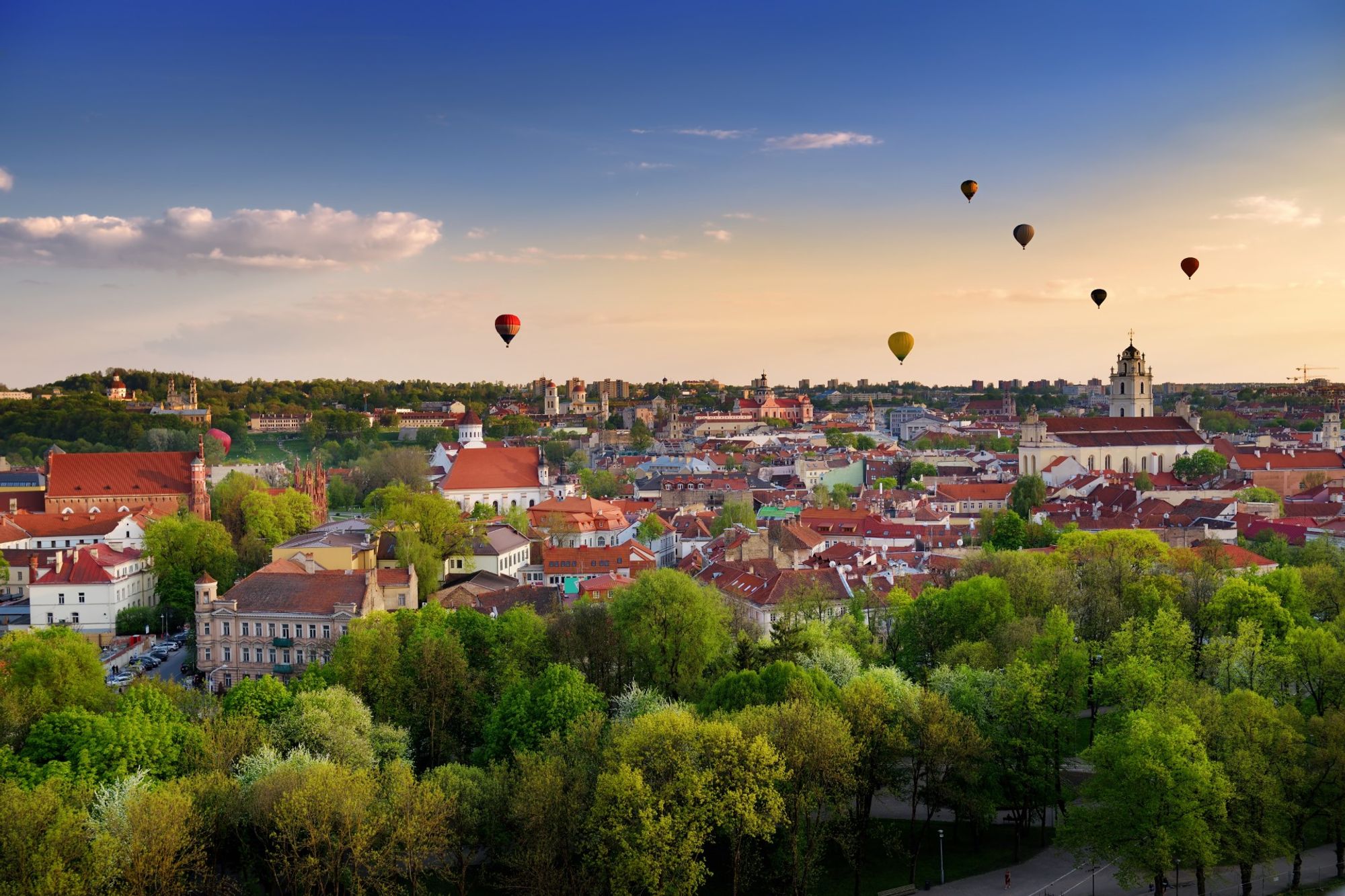
1. Vilnius reveals itself through winding medieval streets and red-tiled rooftops. The UNESCO-recognized Old Town tells stories through its buildings. Gothic church spires reach skyward while Baroque facades bear witness to centuries of history. Gediminas Tower stands on its hill like a sentinel, offering views across the entire city.
Late spring brings blooming chestnut trees along Vilnius streets, while September paints the surroundings in warm autumn colors, both perfect times to wander without summer crowds.
Every evening, music flows from St. Catherine's Church as musicians bring classical compositions to life. The Lithuanian National Drama Theatre's walls absorb whispered conversations as audiences gather for performances, while the Contemporary Art Centre houses works that challenge and inspire.
- -Direct flights to Vilnius International Airport from major European cities
- -Rail connections via Vilnius Railway Station from Poland and Latvia
- -Bus services from neighboring Baltic countries and major European cities
2. Kaunas stands at the confluence of two rivers, its buildings telling tales of a proud interwar capital. The city's unique 1920s and 30s architecture earned UNESCO recognition, creating an open-air museum of bold geometric designs and elegant functionality. Old Town cobblestones lead to Kaunas Castle, whose thick walls have weathered centuries.
Summer brings Kaunas to life. Tables spill from cafés onto Laisvės Alėja as locals and visitors alike enjoy the sunshine between explorations of the city's stories.
The Kaunas Philharmonic fills its halls with music that resonates against historic walls. Basketball courts become cathedrals of sport when Žalgiris plays at home, the crowd's energy becoming as much a part of the experience as the game itself.
- -Flights to Kaunas International Airport from select European destinations
- -Regular train service from Vilnius (approximately 1.5 hours)
- -Intercity buses from major Lithuanian and neighboring Baltic cities
3. Klaipėda greets visitors with salt-tinged air, where half-timbered buildings reflect the city's complex history. As Lithuania's window to the Baltic, this port city connects with the sea through its architecture, food, and daily rhythms. Beyond the harbor waits the Curonian Spit, a narrow peninsula of towering sand dunes and pine forests.
Summer brings warm Baltic waters and endless daylight, perfect for exploring coastal landscapes or watching sunset colors play across harbor waters.
The Klaipėda Drama Theatre's stage has hosted stories for generations. At the Sea Museum, dolphins leap and dive while the sailing ship "Meridianas" stands frozen mid-voyage in the harbor, a symbol of maritime connections that shaped the city.
- How to get to Klaipeda
- -Ferry connections from Sweden and Germany
- -Domestic flights to Palanga Airport (30 minutes from Klaipėda)
- -Regular bus and train services from Vilnius and Kaunas
4. Šiauliai, known as the "City of the Sun," connects visitors to one of Lithuania's most moving sights – the Hill of Crosses. This mound, covered with thousands upon thousands of crosses of all sizes, becomes a forest of faith and memory that has persisted despite historical attempts to remove it.
The gentle warmth of May through August offers clear skies to explore both the hill and the city's tree-lined Vilniaus Street.
The Šiauliai State Chamber Choir fills spaces with harmonies that seem to connect past and present. The city's galleries and the "Aušros" Museum house artifacts and art that tell stories of the region's complex journey through time.
- -Regular train connections from Vilnius (approximately 2 hours)
- -Intercity buses from all major Lithuanian cities
- -Rental car via well-maintained highways from Vilnius or Kaunas
Tips for Traveling to Lithuania
VISA & ENTRY
- EU/EEA/US/UK citizens: No visa required for 90 days
- Others: Apply for a Schengen visa via the Lithuanian embassy
- Valid passport needed (6 months beyond stay)
CULTURAL ETIQUETTE
- Greet with a handshake and maintain eye contact
- Take off your shoes when entering someone's home
- Dress modestly when visiting churches
- Tip 5-10% at restaurants
MONEY MATTERS
- The euro (€) is the official currency
- Credit cards are widely accepted in cities
- Keep some cash for visits to rural areas
- ATMs are easy to find throughout the country
HEALTH & SAFETY
- Emergency number: 112
- Get travel insurance before your trip
- Tap water is safe to drink
- Lithuania has a low crime rate
TRANSPORTATION
- Buses provide good connections between major cities
- Bolt/Uber services operate in urban areas
- Trains connect larger towns
- Driving rules: use the right side of the road and keep headlights on