

Book flight, train, or ferry tickets in
South Korea
- Book online with local operators
- We're here for you 24/7
- Stories by travelers, for travelers


Popular routes
Bangkok to Seoul
Seoul to Jeonju
Seoul to Jeju
Suwon to Seoul
Daejeon to Seoul
Suncheon to Seoul
South Korea Travel Guide: Everything You Need to Know
Discover the wonders of South Korea with our comprehensive travel guide. Learn about the seasonal weather and the best times to visit for your perfect vacation. Find out how to navigate the country easily using various transportation options. Explore the top cities and must-see destinations, from bustling Seoul to historic Gyeongju. Sample delicious Korean cuisine and uncover hidden gems that most tourists miss.
Weather and Best Time to Visit
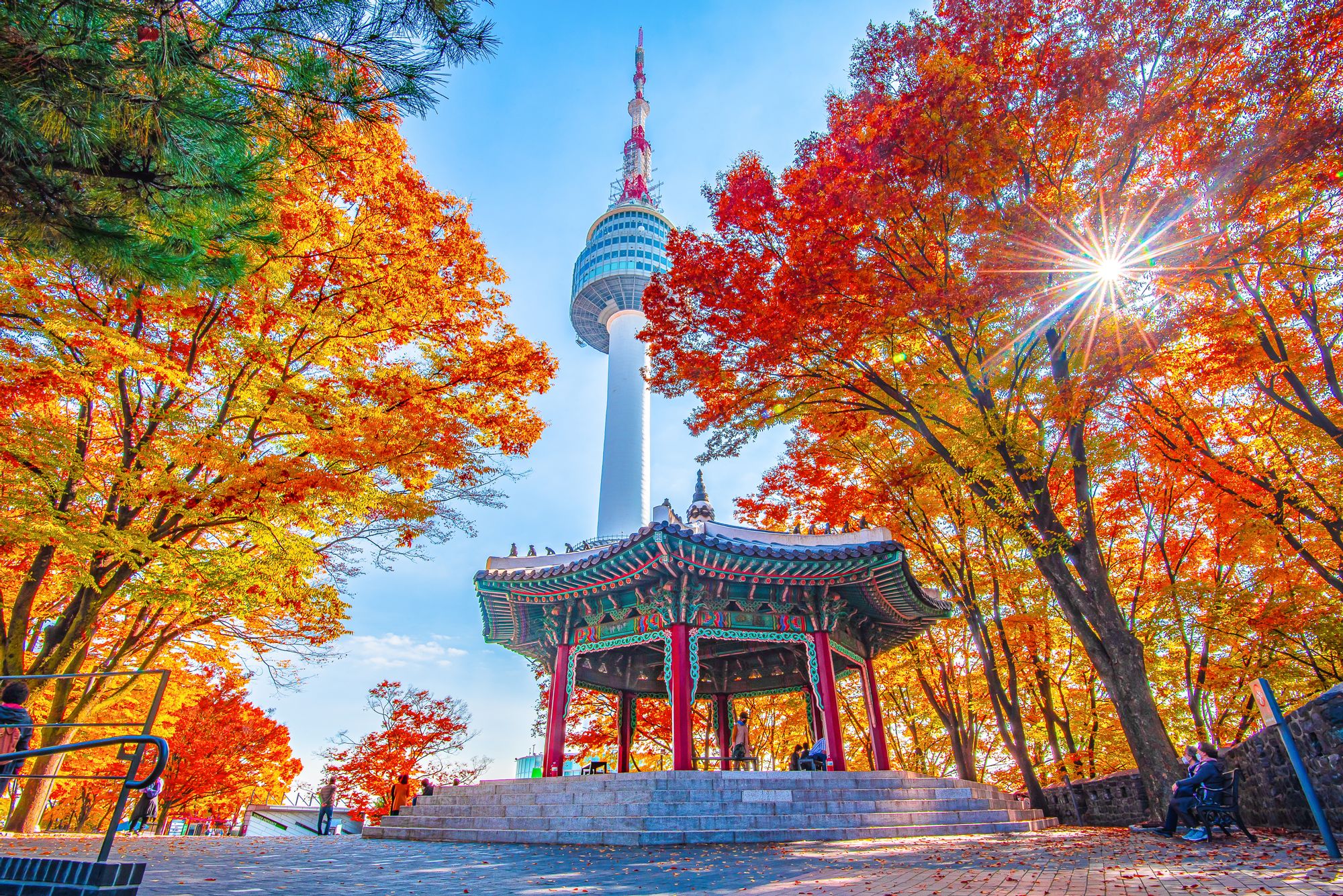
Seoul & Gyeonggi Province: April-May for cherry blossoms and pleasant temperatures, October-November for stunning fall foliage and clear skies.
Busan & Southeast Coast: May-June for warm beach weather without summer crowds, September-October for comfortable temperatures and cultural festivals.
Jeju Island: March-May for wildflowers and mild hiking conditions, September-November for beautiful coastal scenery without summer humidity.
Gangwon Province (East Coast): June-August for beach activities and mountain hiking, January-February for winter sports enthusiasts.
Gyeongsang Provinces: April-May and September-October for temperate weather, ideal for exploring historic sites and national parks.
Note: Typhoon season typically affects the Korean peninsula from July to September, with the southern and eastern coastal regions most vulnerable to heavy rainfall and strong winds.
Traveling by Season
The High Season: June-August
South Korea is busiest during summer, especially July and August. Temperatures typically range from 21-32°C (70-90°F) with high humidity. The monsoon season (late June to late July) brings heavy rain and possible typhoons that may disrupt travel.
Accommodation prices increase by 30-50%, and attractions become crowded. Book hotels, restaurants, and activities well in advance. Local festivals during this time create additional congestion at tourist spots.
The Shoulder Seasons: April-May & September-October
These periods offer the best combination of good weather and reasonable prices. Spring (April-May) features cherry blossoms with temperatures between 10-21°C (50-70°F) and some rainfall. Fall (September-October) brings colorful foliage and temperatures of 13-24°C (55-75°F) with less rain.
Prices are 15-25% lower than during high season, and availability is generally good. Tourist sites are accessible without the crowds of summer, and the weather is mostly stable with occasional light showers.
The Low Season: November-March
Winter sees the fewest international visitors. Temperatures range from -7 to -4 °C (20-40°F), with January being the coldest month. Snow is common, particularly in mountain areas, and sometimes causes transportation delays.
Hotel rates drop by 40-60%, and attractions have minimal wait times. Winter sports enthusiasts visit from December to February for skiing and snowboarding. City exploration remains viable as indoor attractions are comfortable year-round despite the cold.
How to Get to South Korea
When traveling to South Korea, you'll likely arrive at one of several key airports throughout the country. Incheon International Airport (ICN) serves as the nation's primary international gateway, located just outside Seoul. This major hub handles over 70 million passengers annually and provides comprehensive facilities for travelers before they head into the city.
Gimpo International Airport mainly serves domestic routes within Korea, though it does offer some flights to nearby international destinations. If you're visiting Jeju Island to explore its distinctive black rock formations and scenic hiking trails, you'll arrive at Jeju International Airport.
Travelers heading to Busan in the southeast will land at Gimhae International Airport, providing easy access to the city's famous fish markets and coastal attractions. Daegu International Airport and Cheongju International Airport offer both domestic connections and select international flights from their respective cities.
These airports form an efficient transportation network throughout South Korea, serving both business travelers heading to meetings in Seoul and tourists exploring attractions like the southern coastal areas.
Cross-Border Travel to South Korea
South Korea can be reached through several transportation options beyond just flying in. Here are some alternative routes:
- From Japan: The ferry crossing between Fukuoka and Busan takes about 3 hours to cross the Korea Strait. The Japan-Korea route ferries have comfortable facilities, including observation lounges with window seating, where you can watch the coastlines change.
- From China: Overnight ferry services connect Qingdao or Weihai to Incheon, with journeys lasting 15-24 hours depending on your departure point. These China-Korea route ferries offer private cabins as an option for more comfort, and you'll see impressive views of the Yellow Sea during the crossing.
- From the Philippines: There are no direct land routes from the Philippines, but travelers can use connecting ferry services through other Asian ports. This option requires careful planning and additional time.
How to Get Around
When people arrive in South Korea, they discover a country where getting from place to place becomes part of the adventure. Seoul's subway carries passengers through the sprawling capital, with color-coded lines and announcements in Korean and English that help even first-time visitors find their way. The seats fill with students heading to universities, office workers reading on their phones, and grandmothers returning from markets with bags of fresh vegetables.
The KTX trains zip between cities at 305 km/h, turning what would be long journeys into quick trips. Passengers watch rice fields and mountains blur past the windows while enjoying a snack from the food cart. For those who prefer taking their time, Mugunghwa-ho trains roll through countryside towns and stop at stations where locals board with specialty foods from their regions.
Buses reach into mountain valleys and coastal villages where trains don't go. Travelers might find themselves sharing the ride with farmers heading to market or hikers with backpacks bound for national parks.
Island hoppers board ferries to places like Jeju, where the sea breeze and occasional dolphin sightings make the journey memorable before even arriving at the destination.
The T-Money card opens doors to all these experiences — a small plastic card that works on trains, buses, and even pays for a late-night snack at a convenience store when hunger strikes after a day of exploration.
For travelers planning their routes, services like KTX and Mugunghwa-ho make booking tickets straightforward, leaving more time to enjoy the journey itself.
Food Scene
In Jeonju, people have been serving bibimbap for generations, with families passing down their special recipes. Each bowl tells a story, warm rice topped with carefully arranged vegetables, meat, and that trademark egg.
When in Seoul, locals head to Majang Meat Market when they crave samgyeopsal. There, butchers trim the pork belly just right before it sizzles on tabletop grills, filling the air with an aroma that makes conversation pause. As evening falls in Myeongdong, steam rises from tteokbokki cauldrons, and the sweet smell of hotteok being pressed in hot griddles draws people through the crowds.
Morning light filters through Gwangjang Market's ceiling as vendors flip golden bindaetteok with practiced hands. Nearby, others roll kimbap with swift movements that come from decades of practice.
In Busan, fishermen deliver their morning catch directly to Jagalchi Market, where sea creatures that were swimming hours earlier land on plates. Neighborhood restaurants serve dwaeji gukbap in deep bowls, the milky pork broth warming diners from the inside.
Daegu grandmothers still pinch napjak mandu by hand, creating dumplings that look like half-moons.
On Jeju Island, farmers raise black pigs on volcanic soil, producing meat with a flavor you can't find anywhere else.
Hidden Gems
1. Ganghwa
Stone giants sleep in the fields of Ganghwa, telling stories from 3,000 years ago. These massive rocks, balanced with precision by ancient hands, now hold UNESCO recognition. In April and May, tiny wildflowers push through the grass around these prehistoric monuments, adding splashes of color to your photos.
To see them, catch bus 3000 from Ganghwa Bus Terminal, or for those who prefer exploring at their own pace, taxis from Ganghwa-eup can take you between the scattered sites where these stone sentinels stand.
2. Buam-dong, Seoul
Tucked away on a hillside, Buam-dong feels like stepping into a different Seoul. Narrow lanes wind between art spaces and coffee shops where locals chat over steaming cups. When autumn comes, yellow and red leaves frame the curved roofs of traditional houses. The neighborhood breathes quietly, away from downtown's constant motion.
Hop on local bus 1020 or 7022 from Gyeongbokgung Station (Line 3), then follow the path uphill for 10 minutes to discover this pocket of calm.
3. Seongsan
Old fortress walls crumble slowly on Seongsan's slopes, surrounded by trees and birdsong instead of tourist chatter. Hikers following the paths here find themselves alone with views that stretch across the entire city of Changwon. Early summer fills the mountain with deep greens, while fall paints it in reds and oranges.
City bus 103 from Incheon to Changwon Bus Terminal stops at Seongsan-dong, where the mountain waits for those willing to climb it.
Scenic Routes
South Korea unfolds like a scroll of landscapes as travelers move across its terrain. Mountains rise and fall, coastlines stretch along horizons, and historic sites emerge between modern developments. These five routes tell different stories about the country:
Seoul to Busan: The KTX train cuts through the countryside at high speed, yet slow enough to watch rice fields pass by, and mountain tunnels engulf the train in momentary darkness. In autumn, the trees outside wear red and orange. The large windows frame the changing scenes like moving paintings.
Seoul to Gangneung: The path from Seoul's concrete to Gangneung's coastline takes travelers through mountains that appear and disappear around curves. When the East Sea finally comes into view, it marks the journey's reward. Summer brings people to the beaches. Winter sends them to nearby slopes with skis in hand.
Sokcho to Seoraksan: A brief bus ride connects the fishing town of Sokcho to Seoraksan National Park, where rocky peaks stand like ancient guardians. Autumn paints the valleys in warm colors, while spring scatters wildflowers along hiking paths. The buses stop often enough for passengers to step out and capture what they see.
Yeosu to Namhae: The ferry cuts through green-blue waters between islands that dot the southern coast. Summer skies stretch clear and blue overhead, while spring brings flowers to coastal slopes. From the ferry deck, the world opens up in all directions.
Jeju Circular Route: The road around Jeju Island passes by black volcanic rock, waterfalls that drop to the sea, and cliffs where waves crash below. Cherry trees bloom in spring, and autumn days offer clear views of Hallasan mountain standing in the island's center. The route lets travelers stop wherever something catches their eye.
Events, Festivals and Local Markets
During Seollal (Lunar New Year) in Seoul, streets fill with the aroma of tteokguk (rice cake soup) as families bow to elders and exchange gifts. Visitors can join in traditional yutnori board games or watch samulnori percussion performances in neighborhood squares. Children run about in colorful hanbok, pockets heavy with sebaetdon (New Year's money).
At the Jeju Fire Festival in Jeju, flames dance across Saebyeol Oreum mountain as locals recreate the ancient practice of burning fields to kill harmful insects. The orange glow against the night sky draws thousands who share roasted sweet potatoes and makgeolli rice wine while watching folk musicians drum and dancers twirl ribbons.
The Busan International Film Festival in Busan transforms the coastal city into a hub for cinephiles. Independent filmmakers chat with audience members after screenings, while beachside theaters show movies under the stars. People line up for hours to catch the next breakout Korean director or international art film.
When autumn arrives, the Seoul Lantern Festival in Seoul turns Cheonggyecheon Stream into a glowing river of light. Paper tigers prowl alongside illuminated kings from the Joseon Dynasty. Families stroll along the water with street food in hand, pausing to snap photos of lanterns depicting scenes from Korean folktales.
Best Places to Visit
1. In Seoul, old meets new at every corner.
Walking through the grounds of Gyeongbokgung Palace, you might see teenagers in traditional hanbok taking selfies with their smartphones. Just a few subway stops away, the streets of Myeongdong fill with shoppers browsing cosmetic stores and street food vendors selling everything from tornado potatoes to fish-shaped pastries.
Spring brings pink cherry blossoms that line the streets, while autumn paints the city parks in red and gold. These seasons offer comfortable temperatures for exploring outdoor markets or hiking the city's surrounding mountains.
Every day at Gyeongbokgung Palace, guards in colorful traditional uniforms perform the changing ceremony, complete with drums and formal processions. In the evening, locals gather along the Cheonggyecheon Stream, a restored urban waterway where feet dangle over the edge and conversations flow as freely as the water.
- -Incheon International Airport with direct flights from major global cities
- -KTX high-speed rail network connecting to other Korean cities
- -Express bus services from regional transportation hubs
2. Busan tells its story through contrasts. Morning fog lifts to reveal massive container ships entering the harbor while early swimmers brave the waves at Haeundae Beach. In Gamcheon Cultural Village, narrow staircases wind between blue-roofed houses stacked like colorful blocks on the hillside.
The city breathes easiest in spring and fall. During October, the skies are clear and the temperatures cool, perfect for climbing the steps to Haedong Yonggungsa Temple, which sits on coastal rocks with waves crashing below.
Every morning at Jagalchi Market, vendors arrange fresh catch in precise rows while calling out to customers. Nearby, elderly women in rubber gloves and aprons serve raw fish so fresh it seems to dance on the plate.
At night, the Gwangan Bridge lights up, reflecting on the water as locals sit on plastic chairs, eating fried chicken and drinking beer along the shore.
- -Direct international flights to Gimhae International Airport
- -KTX high-speed train from Seoul (approximately 2.5 hours)
- -Ferry services connecting from Japanese ports
3. Gyeongju tells Korea's ancient stories through its landscape. Green grassy mounds rise from the earth, royal tombs holding treasures from a kingdom that ruled over a thousand years ago. Stone Buddha statues carved in the 8th century still gaze out from Bulguksa Temple, their expressions unchanged by time.
The city shows different faces with the seasons. Cherry trees frame the historic ponds in April, while October brings golden ginkgo leaves that carpet the grounds of temples and palaces.
As darkness falls, lights illuminate Anapji Pond, where the stone structures reflect perfectly in the still water. In teahouses tucked away on quiet streets, hosts demonstrate traditional tea ceremonies, explaining each movement and the meanings behind them as incense fills the room.
- -KTX train to Singyeongju Station, followed by a local bus
- -Express buses from Seoul's Express Bus Terminal (4 hours)
- -Local trains from Busan (1.5 hours)
Tips for Traveling to South Korea
VISA & ENTRY
- Most Western tourists get a 90-day visa-free entry
- Check K-ETA (Korea Electronic Travel Authorization) requirement online before travel
- Passports must be valid 6+ months beyond stay
CULTURAL ETIQUETTE
- Bow slightly when greeting
- Remove shoes before entering homes/some restaurants
- Accept gifts with both hands
- No tipping is generally required
MONEY MATTERS
- Currency: Korean Won (₩)
- Credit cards are widely accepted
- T-Money transportation card for transit/convenience stores
HEALTH & SAFETY
- Emergency: 112 (police), 119 (ambulance)
- Travel insurance recommended
- Tap water is generally safe
- Pharmacies ("약국") are widely available
TRANSPORTATION
- Extensive subway system in cities
- Express/intercity buses connect regions
- KakaoT app for taxis